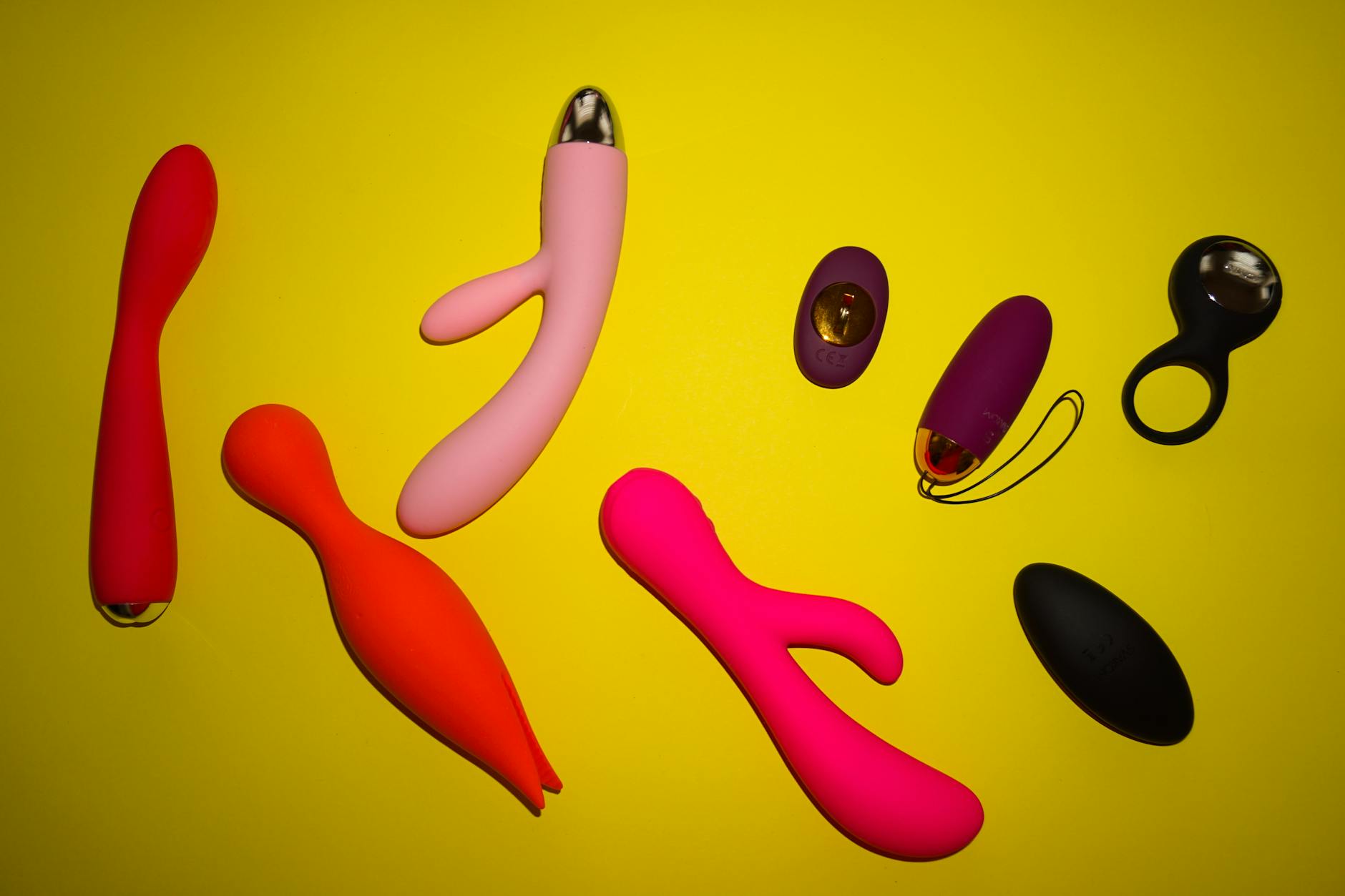
Here's the thing about introducing toys
Most couples never talk about it. One person buys something, hides it, uses it alone, and hopes their partner either doesn't notice or won't care. That silence is where the real problem lives. Not the toy itself.
When I work with couples on intimacy, the conversation around toys isn't actually about whether vibrators are "good" or "bad." It's about what the introduction of a toy means to each person. For some partners, it triggers old stories: "Am I not enough?" "Does my partner want someone else?" "What am I doing wrong?" Those narratives run deeper than any physical sensation, and they're what actually damages connection.
The good news: this is completely fixable. The framework is straightforward, and it starts before you ever touch a lemon clitoral vibrator.
Why lemon vibrators change the conversation
Lemon vibrators are different from traditional vibrators in ways that matter for couple dynamics. They use suction and pulsing rather than pure vibration, which means they demand less "performance" from the penetrative partner. You're not competing with a toy that does something you can never do with your body. Instead, you're adding sensation that enhances what's already happening.
This distinction is worth saying out loud before you introduce one. It's not "I need this because you're not enough." It's "I want this because it's a different kind of sensation, and I want to explore it with you."
That reframe alone changes the emotional temperature.
The conversation framework that actually works
Timing matters. Don't bring this up during sex, right before sex, or when either of you is stressed. Sit down when you have real privacy and time. Here's how I recommend starting:
Open with specificity, not complaint. Instead of "I want us to try something new in bed," try "I've been curious about exploring sensations that feel really different from what we usually do. I want to share that with you." The difference is subtle but crucial. You're inviting them into curiosity, not implying the current situation is broken.
Be honest about why now. Maybe you heard about it. Maybe you've been thinking about it for a while. Maybe you read something that resonated. Give your partner context so they don't have to imagine where this came from. "I read about lemon clitoral vibrators, and they work really differently than the toys I've tried before. The suction thing appeals to me, and honestly, I'd feel more comfortable exploring it if you were part of it."
Invite their response without pushing. This is the part where people get squirmy and either rush to reassure ("Don't worry, you're amazing!") or defend ("It's not a big deal!"). Both shut down honesty. Instead: "What comes up for you when I say that?" Then wait. Let them sit with it. Some partners will be immediately excited. Others will need time. Some will feel insecure, and that's information you need to hear.
Separate two conversations. If your partner is feeling insecure, that's real and valid, and it's not something a toy will fix. It's a conversation about what this means to them, what stories they're carrying, what reassurance actually helps. That conversation might take weeks. That's okay. It's more important than introducing the toy on schedule.
The first time: what actually helps
If both of you are ready to explore together, here's what the research on couple sexuality and my clinical experience both suggest:
Start with the toy separate from penetration. Many couples introduce a clitoral vibrator during regular sex, which creates pressure and novelty at the same time. That's a lot. Instead, spend a session just exploring sensation together. One partner uses the lemon vibrator on the other while you're together but not penetrating. You can focus on pleasure and communication without the logistics of coordinating multiple sensations.
During that first exploration, the receiving partner should guide. "A little slower," "More suction," "This pattern feels really good." The using partner gets to learn something new about what their partner enjoys. That knowledge is intimate in a way that matters.
If it feels good, rest. Don't immediately jump into incorporating it during penetrative sex. Let the experience settle. In my experience, couples who rush from "Hey, let's try this toy" to "Let's use it during everything" often create pressure and performance anxiety. The toy becomes another thing to coordinate, not a source of shared pleasure.
What to do if your partner is reluctant
Some partners will say no. Others will say "maybe someday." Others will try it once and decide it's not for them. Those are all legitimate choices, and they don't mean your sexuality is incompatible.
If your partner is reluctant, dig into why before you try to convince them. Is it about their own body image or performance anxiety? That's something to work with compassion and maybe with a couples therapist. Is it about religious or personal values around toys? That's a boundary worth respecting, and you might explore other forms of shared pleasure that align with their comfort.
The worst mistake couples make is trying to "ease into it." Buying a toy and hiding it, or introducing it without conversation, creates an environment where your partner feels deceived. Even if they eventually warm up to the idea, the resentment about the sneaking lingers.
If your partner isn't interested, you have a choice: you can use the toy alone, you can use it with your partner in ways they've explicitly agreed to, or you can let it go. All three options are okay. What's not okay is using it without consent, even if you're alone in the room.
The pattern that deepens connection
Couples who navigate this well tend to follow a pattern. First, the conversation about why. Second, the conversation about what they're comfortable with. Third, exploration without pressure. Fourth, integration into your regular intimacy in ways that feel good to both of you.
The magic happens in step three, when you're learning your partner's body in a new way. You're getting information about what creates sensation, what rhythm works, what intensity. That knowledge is currency in a long-term partnership. You're literally learning how to give your partner deeper pleasure.
For the receiving partner, there's something powerful about being fully yourself. You're not performing or managing your partner's feelings. You're just receiving sensation and communicating what feels good. Over time, that kind of open communication extends beyond the toy into other areas of sex and beyond.
The toy is just the vehicle. The real intimacy is in the conversation.
When a lemon vibrator actually saves the relationship
I want to be honest about this: sometimes couples introduce a vibrator because one partner's pleasure has become difficult or infrequent. Maybe it's physical (recovering from a condition or medication that changed sensation). Maybe it's emotional (depression, disconnection, stress). In those cases, a lemon clitoral vibrator can be genuinely restorative. It's not a band-aid. It's a tool that helps rebuild the experience of pleasure within the relationship.
When you're using it with that intention, frame it that way. "I miss how good this feels, and I want to get that back with you. This might help." That honesty changes everything. Your partner becomes part of the solution instead of the problem.
The conversation you're probably avoiding
Most couples need to have one more talk, and it's the awkward one: what happens if you want to use this toy solo? What if your partner wants to use something alone that you're not involved in?
Those are separate conversations from couple sex. And they matter. Some partners are completely fine with masturbation toys. Others feel threatened by them. If you're introducing a lemon vibrator to couple sex and your partner seems okay, that doesn't automatically mean they're fine with you using it alone. Ask.
You might also discover that you want to use lemon vibrators during solo sessions in ways that feel different or more intense than what you do together. That's normal. It doesn't mean you're losing interest in partnered sex. It means you have a rich inner sexual life, and that's healthy. The conversation is just "This is something I'd like for myself, and it doesn't change what I want with you."
What to do if shame shows up
Shame is the real barrier here, not judgment from your partner. After the conversation happens and you've decided to explore together, you might still feel embarrassed, self-conscious, or worried about being watched. That's incredibly common.
The antidote is slowness and specificity. "I feel a little shy about this. Can we dim the lights?" or "Can we start with you behind me so I'm not facing you?" or "I need you to tell me you're enjoying this." Those micro-adjustments matter. Your partner wants you to feel comfortable. Give them the actual information to help.
If the shame doesn't lift after a few sessions and some conversation, it might be worth talking to a therapist together. Sometimes shame has roots that run deeper than just "trying something new." Getting support is not failure. It's actually one of the most direct paths to real sexual freedom with your partner.
FAQ: The questions couples actually ask
What if introducing a toy ruins the spontaneity?
Spontaneity isn't the absence of planning. It's being present and responsive in the moment. You can plan to have the vibrator available (which takes pressure off the moment) and then be completely spontaneous about how you use it or whether you use it at all. Many couples find that knowing the toy is there removes the mental load of desire, which actually makes sex feel more natural.
Should we buy a toy together or separately?
There's no rule. Some couples love shopping together because it becomes part of foreplay. Other couples find that awkward. If one of you is buying, I'd suggest picking something the receiving partner genuinely wants, not a compromise choice. A lemon clitoral vibrator chosen with your actual preferences in mind feels different from a generic "beginner" toy. If you're going together, make it fun. That's the energy you want.
What if one partner wants it and the other is indifferent?
Indifference is different from reluctance. If your partner is genuinely indifferent (not "I'm fine with it" as code for "I'm uncomfortable"), you can move forward with conversation and exploration. Just make sure they're actually indifferent and not managing your disappointment. Ask directly. "I notice you seem okay about this but not excited. Are you genuinely neutral, or is something making you uncomfortable?"
How often should we use it?
There's no "should" here. Some couples integrate it into every session. Others use it occasionally. Many couples find that they use it intensively when it's new and exciting, then it becomes a periodic thing they return to. That's all normal.
What if one of us loves it and the other doesn't?
Then you have a conversation about that. "I love this, and I notice you don't seem as into it. What would make it better for you?" Maybe it's the timing, the setting, the pattern. Maybe it's not the toy at all but something about the way it was introduced. Or maybe your partner genuinely just doesn't connect with this particular sensation, and that's fine. You can use it alone, and they can engage in other ways during that time.
Can lemon vibrators actually help if we're disconnected?
Not directly. A vibrator can't fix resentment, emotional distance, or lack of communication. What it can do is create a context for deeper communication about pleasure and desire. If you're using it as a way to avoid the actual conversation about distance, it won't help. If you're using it as a vehicle for getting closer and learning your partner's body again, it might be part of the solution.
The bottom line
Introducing a lemon clitoral vibrator to partnered sex is fundamentally about communication. You're not actually introducing a toy. You're inviting your partner into your desire, your curiosity, and your sexuality in a way that requires honesty. That same honesty, applied over time, is what deepens intimacy.
The toy is the easy part. The conversation is where the real work and the real connection happen. If you can have that conversation with kindness and specificity, the rest follows naturally. And if your partner isn't ready, that's information too. How you both handle that moment says everything about whether you can navigate bigger vulnerabilities together.
Ready to explore? Start with the conversation, not the vibrator. Everything else follows from there.