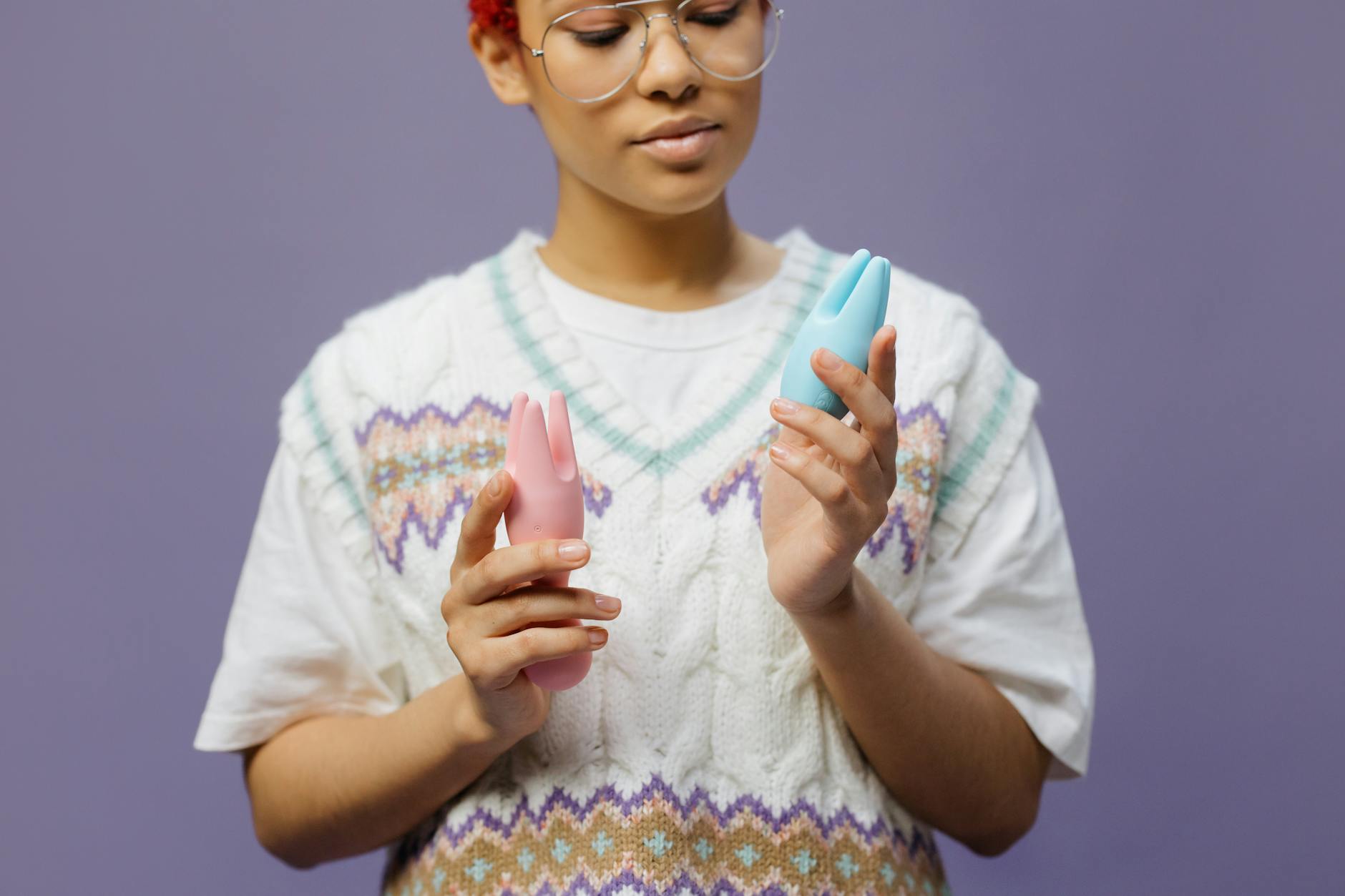
Here's the thing about bringing toys into partnered sex
Most people assume it will be weird. Most people also assume their partner will take it the wrong way. And most people never actually ask. Instead, they hint, hint harder, leave it by the nightstand, or just keep quiet and use it alone. Which is fine, honestly. But if you want to use a lemon vibrator or any clitoral vibrator together, the conversation is the actual gift. Not the toy.
I've worked with hundreds of couples who got stuck right here. The avoidance wasn't about the vibrator. It was about what it represented: admitting desire, saying no to the status quo, risking that your partner might feel replaced or inadequate. None of those things are true, but the fear is real. So let's walk through how to actually do this.
Why partners get defensive (and how to sidestep it)
When someone brings up a sex toy unprompted, their partner often hears one of three things: "You're not enough," "I'm bored," or "I want something you can't give me." All three interpretations are understandable and all three are usually wrong.
Here's what's actually true: clitoral vibrators like the Lem or other lemon vibrators work on physiology. They're not commentary on your partner's skill or desirability. They're physics. A suction-based clitoral vibrator reaches nerve density and frequency that hands simply can't match. That's not a criticism. That's an invitation.
The defensiveness vanishes when you reframe it. Instead of "I need a vibrator to get off," try: "I want us to explore this together because I think we'd both enjoy it." One sentence removes the ego threat. The other creates partnership.
The actual conversation (what to say and when)
Timing matters. Don't do this during sex, right after sex, or when either of you is rushed or stressed. Pick a normal evening, maybe after dinner, when you're both relaxed and there's no performance pressure.
Start simple. Try: "I've been thinking about something I'd like to explore with you. Have you ever thought about using a vibrator together?"
Then stop talking. Let them respond. Their first answer might be "no," "I don't know," or "maybe." None of those is rejection. They're just honest starting points.
If they seem open, continue: "I think it could feel really good for both of us. I'd love to explore what works for my body, and I want you there." Notice you're saying "for both of us" and "I want you there." You're not replacing them. You're including them.
If they seem hesitant, ask why. Is it about cost? Practicality? Fear of judgment? Worry that they're not enough? Different reasons get different answers. Someone worried about cost might relax once they know it's an investment you're both excited about. Someone worried about inadequacy needs to hear explicitly: "I love how we are together. This is about me learning my own body more, and wanting you to see that."
How to actually use a lemon vibrator with a partner
Once you've both agreed to try, the pressure switches to execution. And this is where most couples get stuck again, because they don't know how.
You have options. Option one: they hold the vibrator on you while they use their hands or mouth elsewhere. This creates contact and connection. Option two: you guide the vibrator while they focus on other areas. Option three: they watch while you use it on yourself. All three are partnered sex. None requires him or her or them to be doing something specific to your clitoris.
Start with the settings low. A lemon vibrator like the Lem has multiple patterns. Explore them together. Talk about what feels good. "Higher," "slower," "there," "that pattern again." Your partner doesn't have to guess. You're teaching them about your body in real time.
Expectation management is crucial here. You might not orgasm the first time. You might feel self-conscious. Your partner might feel awkward holding the toy. All of that is normal and none of it means it won't work long-term. The win in session one is that you did it together and you talked about it. The orgasm can come later.
Managing the emotions that come up
Sometimes, even after a great conversation, emotions surface during or after. Your partner might feel vulnerable watching you pleasure yourself. You might feel exposed. They might worry they're doing it wrong. These aren't signs of failure. They're signs you're actually being vulnerable together, which is where real connection lives.
If something feels off, pause. Ask: "What's coming up for you?" Make space for that. Maybe they need reassurance. Maybe you need to slow down and use the vibrator just on yourself for a few sessions before trying together again. Flexibility and checking in are more important than sticking to a plan that feels bad.
One more thing: if your partner is worried they're not doing it right, remind them there's no right. You're both discovering what works. Every conversation, every attempt, every moment of awkwardness is part of building intimacy. That's the actual win.
When they're not ready and how to handle it
Some partners will say no. Maybe now, maybe ever. That's information, and it matters.
If they're saying no because they're not ready, you can ask what would help them get there. Time? Talking to a therapist together? Reading about why clitoral vibrators work differently? Some barriers are real resistance. Others are just unfamiliarity.
If they're saying no and staying there, you have to decide what you need. Some people are content using vibrators solo. Some people feel resentful that their partner won't explore. Both reactions are valid. This is where you might benefit from talking to a couples counselor, not because something is broken, but because a third party can help translate what you're both actually saying.
The hard truth: you can't force someone into sexual exploration they don't want. You can only decide if the relationship works for you as it is. Often, that clarity itself opens something up. People feel safer saying yes when they know no is accepted.
Common fears your partner might have (and how to address them)
Fear 1: "You'll want this instead of me." Address it directly. "I want this with you. There's a difference between using it alone and experiencing it together. Both are good, but together is what I'm asking for."
Fear 2: "I can't make you come anymore." Lemon vibrators and clitoral vibrators work on frequency and pressure that bodies can't match. That's a feature, not a flaw in your body. "You do make me come. This is different. We can use this together and you're still the one I'm with."
Fear 3: "People will judge us." No one has to know. This is private. "What happens here is between us."
Fear 4: "I don't know what I'm doing." Neither does anyone. "We'll figure it out together. There's no performance here. We're just exploring."
The broader picture
Bringing a lemon vibrator into partnered sex isn't about the toy. It's about saying: "I want us to know each other more fully. I want you to see what turns me on. I trust you enough to be vulnerable about my desire." Those conversations ripple into every other part of the relationship.
Couples who can talk about sex tend to be better at talking about money, conflict, and emotional needs. Communication around pleasure trains the skill for everything else. So this awkward conversation is actually an investment in the relationship itself.
If you're nervous about how to start, remember: your partner probably wants to please you. They probably also want to be wanted. A conversation that says "I want us to explore this together" hits both of those needs. The vibrator is just the excuse to have it.
Common questions about using lemon vibrators with a partner
What if my partner feels replaced or threatened by the vibrator?
The best insurance against this is the conversation before the toy arrives. Make it clear that clitoral stimulation is distinct from partnered penetration or other forms of touch. You're not replacing them. You're adding a dimension. If they're still feeling threatened after, ask specifically what scared them. Often it's not the vibrator at all. It's an underlying worry about desire, attractiveness, or the relationship. A couples therapist can help untangle that more effectively than any conversation with Hello Nancy.
Can we use a lemon vibrator during penetrative sex?
Yes. The Lem and other lemon clitoral vibrators work on the external clitoris, so they're compatible with penetrative sex if that's part of your routine. Some partners find this incredibly hot because they get to feel both sensations and see your pleasure building. Others prefer to keep oral or hand play separate from vibrator use. There's no rule. Experiment and see what feels good.
How do I ask for help if I'm not sure where to place the vibrator?
Direct guidance works. "A little higher," "more to the left," "press it in more." Lemon vibrators and clitoral vibrators are designed to be intuitive, but every body is different. Your partner isn't a mind reader. Tell them where it feels good and what you need.
What if neither of us knows how to use it?
Watch the instruction video or read the care guide together. It takes five minutes. Then experiment without pressure. You're not trying to have the best experience ever. You're learning. The learning is the point.
Should I be worried about hygiene or safety?
No. Wash the vibrator before and after use with warm soapy water or a toy cleaner. Use water-based lube if needed. Store it in a clean, dry place. That's all the hygiene you need. If your partner has concerns about body-sharing toys, you can also designate it as "your" vibrator and they use their hands while you control it. Personal comfort is personal.
What if the conversation goes badly?
First, clarify: what happened? Did they shut down? Get angry? Laugh? Express doubt? Each response needs a different follow-up. If they shut down, give them space but come back later. "I noticed this felt hard. I want to understand why." If they got angry, same thing. If they laughed, it might be nervousness, not rejection. Ask: "What's coming up for you?" If they doubt it'll work, that's fair. Suggest one session together and if it's truly awful, you don't do it again. You're not asking for forever. You're asking for a conversation and one try.
Can we use lemon vibrators if we're long-distance?
Some remote-controlled vibrators exist, but most lemon clitoral vibrators are meant for direct contact. If you're apart, you could use it solo and then video chat about it. Or wait until you're together. Long-distance couples often find that absence sharpens the need for honesty about desire. Use that momentum when you're back in the same room.
The real takeaway
Introducing a vibrator to partnered sex requires one thing above all: honesty about what you want and why. Everything else flows from that. You're not asking permission to be sexual. You're inviting your partner into a part of your sexuality they haven't seen yet. That invitation, if delivered with confidence and care, is almost always met with openness. The vibrator is secondary. The vulnerability is the point.