The thing nobody tells you about new partnerships
Honestly, the moment you realize you want to bring a toy into the bedroom with someone new is often the moment you start catastrophizing. You imagine awkwardness, rejection, or them interpreting it as "you're not enough." None of that has to happen. What actually matters is timing, framing, and a conversation that feels natural instead of like a safety briefing.
I've worked with hundreds of couples navigating this exact moment. The ones who handle it well don't avoid the topic. They own it.
When to bring it up (and when to wait)
There's a sweet spot for this conversation. Too early, and you're introducing sex toys before you've built enough trust or physical comfort. Too late, and you might create the impression you've been hiding something.
I typically recommend waiting until you've had sex together a handful of times. This usually means you're past the first-time nerves, you've established rhythm and communication, and you both feel reasonably comfortable being naked in the same room. You're not sitting down for "the talk" on date three.
If you're six or seven encounters in, you've probably already learned something about what they respond to, what rhythm works, and whether they ask questions or seem curious. Those details tell you whether they're the kind of partner who'll be into exploring together.
How to frame the conversation
Here's what I tell people in my practice: don't lead with logistics. Lead with desire.
Instead of, "I have this vibrator I want to try," try something like, "I've been thinking about how we could intensify things together." Or, "There's something I'd like to explore with you." This frames the lemon vibrator not as a replacement for them, but as a tool for both of you.
If they ask what you mean, that's your opening. "I have a clitoral vibrator. I find that sensation really helpful for reaching orgasm, and I'd love to explore it with you." Simple, honest, specific.
What you're doing here is separating two fears they might have: (1) "Am I not enough?" and (2) "Is this weird?" By naming the vibrator as something that enhances sensation for you specifically, you're answering both.
The physical comfort part (how to introduce without pressure)
Once they've said yes or expressed interest, the next step isn't immediately using it. It's desensitizing it as a concept.
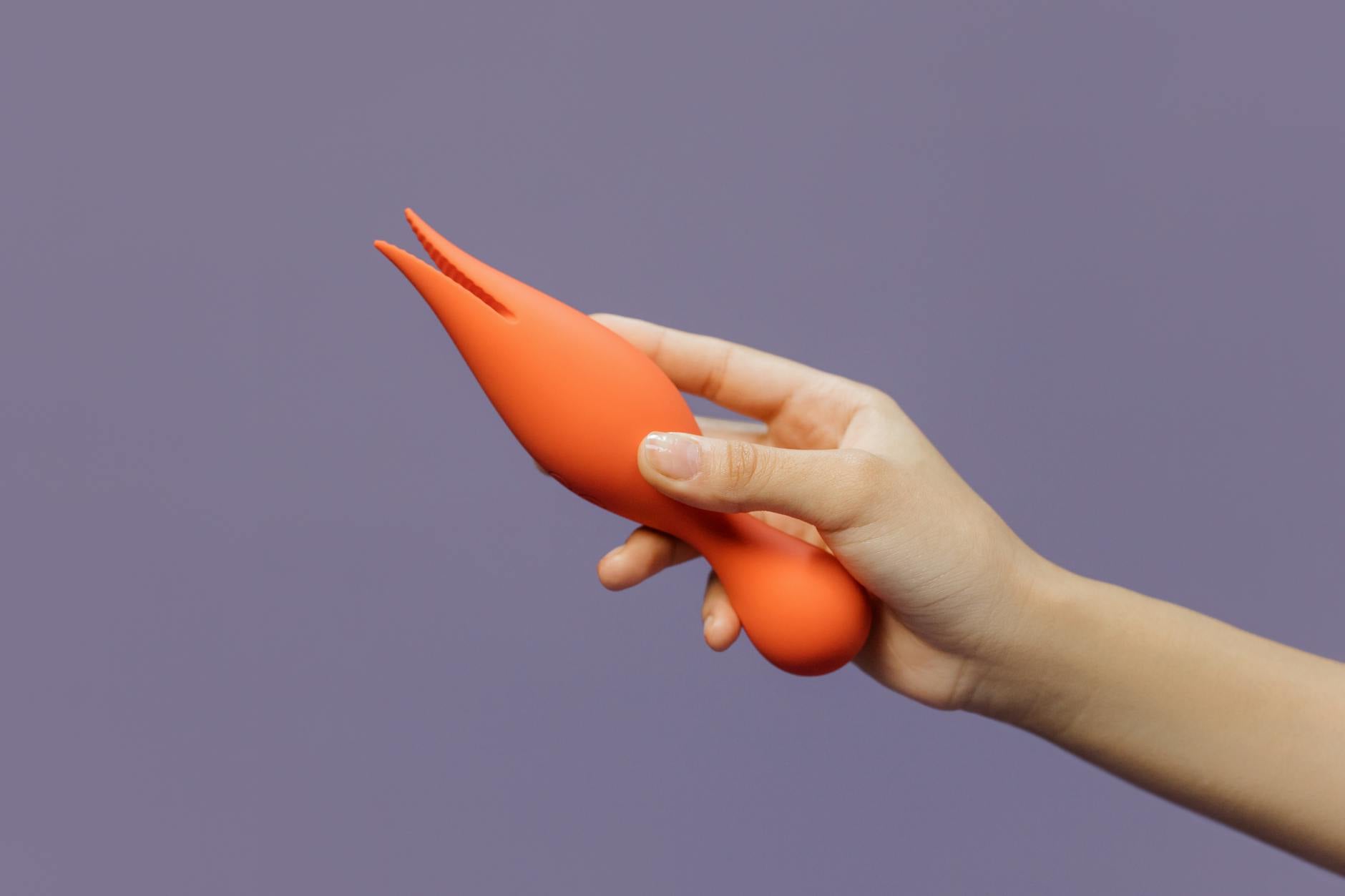
If you're comfortable, let them hold it. Let them feel the weight, the texture, watch it operate (some lemon clitoral vibrators like the Lem use gentle suction rather than traditional vibration, which can feel surprising until you understand it). No pressure to use it that night. You're just making it a normal object in your shared space, not some shocking surprise midway through.
When you do decide to use it together, there are a few ways to approach it:
You control it solo first. Many partners actually prefer watching. If you're comfortable, start using it on yourself while they're present. This removes the pressure of them having to perform the action "correctly," and it gives them permission to enjoy the sight of you experiencing pleasure. Some of my clients say this is the hottest part because their partner is fully engaged but not performing.
They operate it under your guidance. Once you're both comfortable, guide them. "A little lower," "stay right here," "slower." This keeps them in control of the sensation while you're steering. It's collaborative, and many couples find it brings them closer because the communication is constant.
You use it together. If you're in a position where they can access you comfortably (side-by-side, them behind you, etc.), they can hold the vibrator while you're also connected. This requires communication, but it's profoundly intimate because you're literally working together toward your pleasure.
What to expect emotionally (from both of you)
Men especially sometimes experience a moment of defensiveness or insecurity the first time a toy enters the picture. This is normal and usually temporary. What helps: reassurance that's specific. "I love what you do with your hands. This is just different, not better." "I get sensation more intensely from this, but I want you here." Frame it as addition, not replacement.
You might also feel vulnerable the first time you use it with someone new. You're literally letting them watch you seek intense pleasure. That's exposure. But here's what I've seen: partners who love you are usually turned on by your pleasure. They want to see you reach that peak. Your vulnerability becomes attractive rather than risky.
Practical logistics (the stuff nobody talks about)
Before that first time together, know your toy. Understand how long the battery lasts, where the power button is, whether it has intensity levels. The last thing you want is fumbling around trying to figure out the controls while you're both naked. Test it beforehand so you know it works and you know how to operate it by touch.
Lube helps, even if you don't think you need it. Water-based lube works with any toy material and reduces friction. Some people find lemon clitoral vibrators, particularly suction-based ones, work better with a tiny bit of lubrication. Have it within reach.
Also: clean it beforehand. Toy hygiene isn't romantic, but it's important. A quick wash with warm water and toy cleaner takes thirty seconds and matters.
If they say no (or seem hesitant)
Some partners will be genuinely uncomfortable with toys. They might have hangups about it, feel like it's not "natural," or just need more time. Respect that without letting it make you feel rejected.
You can say something like, "No pressure at all. But if you're ever curious, I'm here." Then drop it. People's comfort with sex toys often shifts over time, especially once they see that you're not obsessed with the toy, you're excited about connection with them.
If it's a dealbreaker for you (you want to explore with toys and they absolutely don't), that's information too. Neither of you is wrong. But it's worth knowing early rather than building a whole relationship on incompatible needs.
The first time, beat by beat
You've had the conversation. They're interested. Now here's what often works:
Start like you normally would. Kiss, touch, build arousal the way you always do. Don't rush to the toy. Once you're already turned on and comfortable, mention it. "I want to try that thing we talked about." Keep it casual.
Get into a position where you can control it or guide their hand. If they're nervous, start with low intensity. The Lem, for example, has pattern options. Start at level one or two. Let them feel what it does.
Stay present with them. Make eye contact. Tell them how it feels. "That feels amazing," "right there." Your feedback both guides them and lets them know they're doing something right.
If it feels good, keep going. If something feels off, pause and adjust. Communication mid-act is hot, not awkward. "A little higher," "ease off the intensity," "hold still for a second." Partners who care about you will want these instructions.
After (the conversation that matters more)
Once it's over, talk about it. Not in a debrief way, but naturally. "That was really good," "I liked how you..." or "I want to figure out how to make the angle work better next time." These little affirmations matter more than you think. You're both normalizing the experience and figuring out what works.
If something felt off, that's okay to say too. "I think I like it better when you hold it steady instead of moving it," or "The intensity was almost too much at the end." Most partners appreciate the feedback because it means next time will be better.
Why this matters
Introducing a lemon clitoral vibrator with a new partner isn't just about pleasure (though that's part of it). It's a conversation about what you need, what you want to explore, and whether you can be honest about desire together. Partners who can navigate this conversation with openness and humor usually have better sex overall because they're already communicating.
You deserve to feel good. Your partner deserves to know how to help you feel good. A vibrator is just a tool to make that easier. Treat the conversation like it's important, because it is.
People also ask
Should I tell a new partner I own vibrators before we sleep together?
Not necessarily. You don't owe anyone a sex toy inventory on date one. But if you're planning to use one with them fairly soon, mentioning it once you've already had sex together a few times feels more natural than surprising them mid-act. The framing is key. "I want to show you something that helps me feel amazing" lands different from "Surprise, I have this toy." Give them the choice and the context.
What if they think the vibrator means they're not satisfying me?
This insecurity is real, and it's worth addressing directly. Explain that sensation works differently for different bodies. A vibrator doesn't diminish what they do with their hands or body. It enhances the overall experience. You can also reframe it: "I want more of you and this together." The combination is the point, not a replacement.
Is it weird to ask them to operate it?
Not at all. Many couples find it's the most connected way to use a toy together because you're still touching, communicating, and collaborating. You're guiding the sensation while they're engaged in creating it. That's intimate. Some partners actually prefer this because it keeps them active and involved instead of watching from the sidelines.
What if it doesn't feel good the first time?
Sensation with a new partner is different. Your nervous system is activated differently. The angle might be off. The intensity might feel weird. All of this is normal. Try it a few times with small adjustments before deciding it's not working. Also remember that how lemon vibrators feel different in your thirties vs. forties can vary wildly based on stress, hormones, and comfort level. A new relationship brings new nerves.
Should we use it every time we have sex?
No. Use it when you feel like it. Some partners use toys once a week, some once a month, some only occasionally. There's no right frequency. The goal is that it feels like an option, not a requirement. If you're always reaching for a vibrator, it might signal something else is off (boredom, disconnection, pressure). If you use it sometimes and it feels good, that's exactly right.
What if they want to use it but I'm not comfortable yet?
Take your time. You don't have to participate in anything that makes you uncomfortable. You can watch, you can step back, or you can say you need more time before you're ready. Good partners will respect that boundary. And remember that comfort often grows with familiarity. You might feel very different about it after you've seen how your partner responds or how it actually works in practice.
The bottom line
Introducing a lemon clitoral vibrator with a new partner is an opportunity for deeper communication, not a minefield to navigate. The conversation is usually less awkward than the anticipation of it. Most partners who care about you are interested in your pleasure. A vibrator just opens the conversation about what that looks like together.