
The real reason your partner feels left out
Let's be honest: when you introduce a vibrator into partnered sex, something shifts in the room. Your partner watches you reach for pleasure that their body can't reliably deliver. That's not ego talking. That's a legitimate moment of vulnerability. They're watching you solve a problem they thought they were supposed to solve.
The good news is that Lemon vibrators don't have to be a substitute for partnered touch. They can be an amplifier. The conversation just has to happen before the device shows up in bed.
Why the initial resistance actually makes sense
Your partner isn't upset because you want more pleasure. They're upset because the thing that makes sense to you ("I need this to come") can sound to them like "you're not enough." These are two different conversations wearing the same outfit.
Here's what's usually happening underneath: your partner has internalized a narrative that their hands, their mouth, their body should be capable of getting you off. When that narrative breaks, they experience it as failure. Even if logically they know that's not how bodies work.
The suction technology of Lemon clitoral vibrators works in ways a partner's fingers simply can't replicate. You're not being picky. You're being physiologically honest. Your partner needs to hear that distinction spelled out.
The conversation before the vibrator enters the bed
Don't sneak a Lemon vibrator into sex and hope for the best. Have this conversation outside the bedroom, fully clothed, when neither of you is aroused.
Here's the frame: "I want to explore using a clitoral vibrator during sex. This isn't about you not being enough. It's about my body needing a specific kind of stimulation to reach orgasm reliably. I want you involved. I want us to figure this out together."
Then answer these three questions your partner probably has but won't ask:
-
"Will you still want my touch?" Answer: Yes, and here's how. (See section below.)
-
"Does this mean I'm failing at something?" Answer: No. Bodies are complicated. Your body needs X, and I need Y. Neither of us broke.
-
"What's my role if you're using a toy?" Answer: That's what we're going to figure out right now.
The difference between a conversation that lands and one that doesn't is specificity. Don't just say "I want to try something new." Say "I want you to hold me while I use a lemon vibrator, and then we figure out what feels good for both of us."
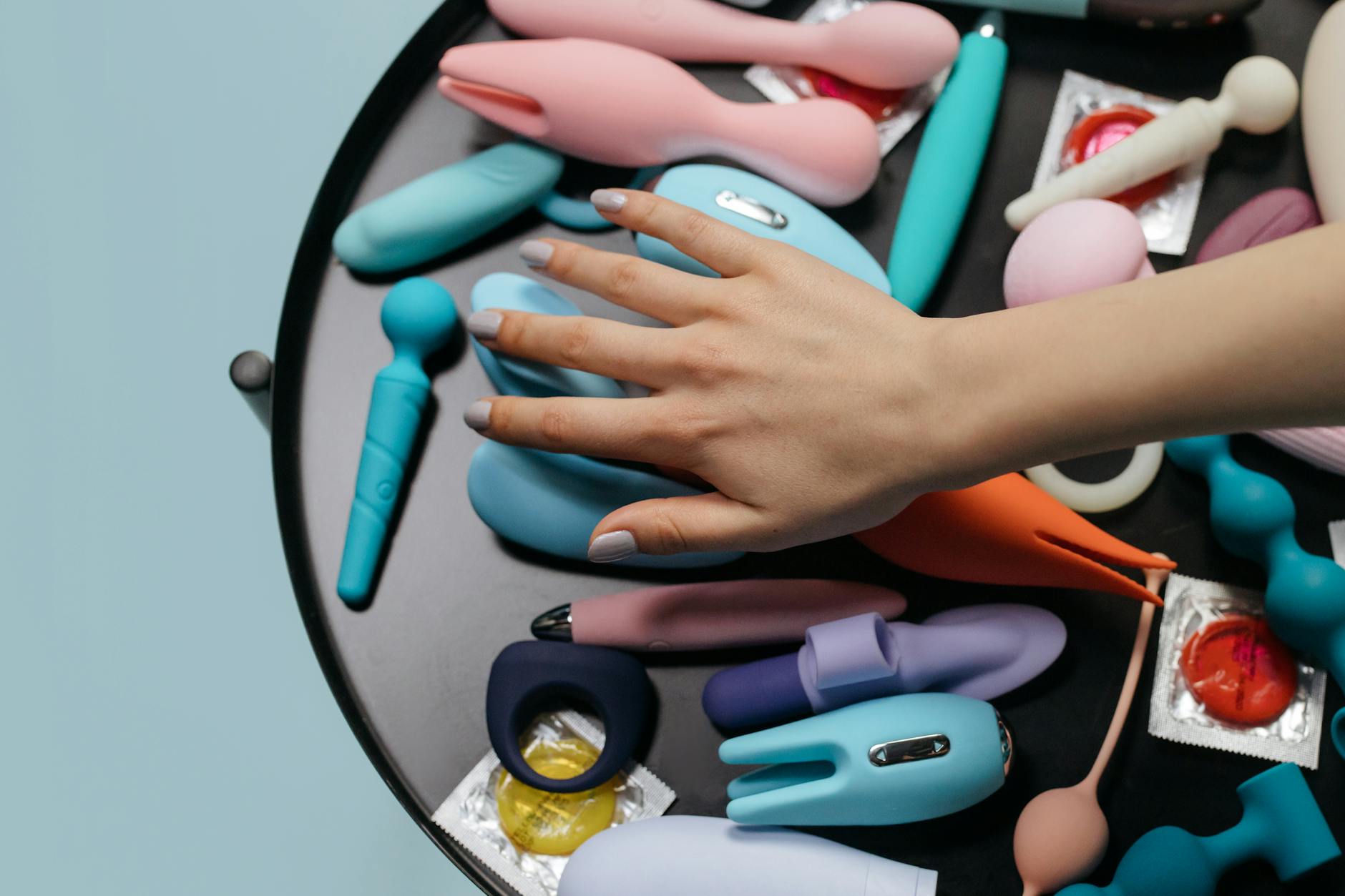
Photo by FounderTips on Pexels
Four ways to integrate Lemon vibrators so your partner stays central
1. They hold it while you guide.
This is where the magic happens. Your partner isn't sitting on the sidelines. They're in control of the device, learning exactly where you need pressure and how fast. You're teaching them the way your body actually works. That's intimacy.
Try this: "Start at the lowest setting. Move it in slow circles. Tell me when it feels good." You're giving feedback. They're learning. The vibrator becomes a translator between your needs and their hands.
2. They provide other stimulation while you use the vibrator.
The clitoral vibrator is handling one job. Your partner handles everything else. They kiss you, touch your breasts, hold you, penetrate you. Lemon vibrators don't occupy your whole body. They occupy one part of it.
Many people find that combining a clitoral vibrator with penetration or internal fingering creates an intensity nothing else can match. Your partner becomes the foundation. The vibrator becomes the accent.
3. You use it together during foreplay.
Introduce the vibrator early, when the goal isn't necessarily orgasm yet. Let them watch you use it on yourself. Let them ask questions. Remove the assumption that it's only for the finale. Sometimes the hottest moment is when your partner sees you respond to touch and decides they want to participate.
This reframes the vibrator from "replacement" to "discovery." You're not hiding. You're inviting them into your pleasure.
4. They use it on you while you're inside them or engaging in other activities.
If you have a partner with a penis, the dynamic shifts when they can use a Lemon clitoral vibrator on you while you're together. You get the stimulation you need for orgasm. They get the sensation of being inside you. Orgasm becomes a shared project instead of a solo sprint.
This requires a light touch and some communication ("A little to the left" goes a long way), but the payoff is extraordinary.
Managing the emotional stuff that surfaces
Even after you've had the conversation, emotions can surface during sex. Your partner might get quiet. They might lose focus. They might say it doesn't bother them but their body language says otherwise.
Stop. Check in. "How are you feeling?" This isn't killing the mood. This is building a stronger one.
Common worries that come up:
"Am I boring now?" No. You're being specific about what your body needs. If anything, you're more interesting.
"What if I can't compete?" You're not in competition. A vibrator is a tool. Your partner is a person. Different categories.
"Does this mean you'll want this every time?" Probably not. Some nights you'll want nothing but hands. Some nights you'll want the vibrator. Variety is normal.
The couples who integrate Lemon vibrators most successfully are the ones who talk about feelings before, during, and after. That vulnerability is what makes it work.
Why Lemon vibrators are better for partnered sex than other options
The suction technology of a Lemon clitoral vibrator is quieter and more intuitive than traditional buzzing vibrators. Your partner can feel what's happening. There's less noise, less mechanical weirdness. It feels like an extension of touch, not a machine interrupting the moment.
Clitoral vibrators that use air-pulse technology also tend to deliver faster, more reliable orgasms, which means the whole experience gets shorter. You're not tense and working toward something for twenty minutes. You're engaged and responsive.
That's not less romantic. That's more present.
The plot twist: your partner might discover they like this
Here's what I've seen happen repeatedly: partners who were nervous about vibrators end up being the ones reaching for them. Once someone stops seeing a device as a threat and starts seeing it as a way to give their partner reliable pleasure, the energy in the room changes completely.
Your partner gets to watch you climax. They get to be the reason. The vibrator is just the tool they're wielding. That's powerful.
When to call in professional help
If you've had the conversation, you've tried integrating the vibrator in multiple ways, and your partner is still withdrawn or resentful, that's worth exploring with a couples therapist. The vibrator might be a symbol for something deeper. Maybe it's about control, or feeling needed, or anxiety about aging and attractiveness. A professional can help you untangle that.
If you or your partner are experiencing specific sexual dysfunction, check out our resources on how to use Lemon vibrators when you're rebuilding sensation after numbness from medication or how to use Lemon vibrators during partnered sex for better sensation for context.
FAQ
What if my partner refuses to even try using a vibrator during sex?
That's information. They're not comfortable yet, and that's okay. Don't push it. Instead, use the vibrator solo first (or with a partner who's enthusiastic about it) so you build confidence and learn how your body responds. Your partner can gradually become more curious as they see you enjoying yourself without defensiveness on your part. Pressure makes resistance harder.
Can I use a Lemon vibrator during penetration with a partner?
Absolutely. Many people find that clitoral stimulation during penetration delivers the most intense orgasms. If you're the receiving partner, you can position the vibrator against your clitoris while your partner penetrates. If you're the penetrating partner, you can hold or guide a vibrator against your partner's clitoris. Communication about pressure and positioning matters more than usual.
My partner feels like using a vibrator means I don't find them attractive anymore. How do I fix this?
You can't fix it by not using the vibrator. You fix it by being explicit and repeated: "I am attracted to you. My body needs this specific stimulation to orgasm. That has nothing to do with how I feel about you." Then show them by integrating them into the experience. Let them hold it. Let them watch your face. Let them ask questions. Attraction and vibrators exist in the same room all the time.
Is it normal for my partner to feel jealous of a sex toy?
Completely normal. Your partner has learned that their role is to provide pleasure. When something else provides it more reliably, that feels like a role loss. That's a real emotion, even if the fear isn't rational. The solution is reframing: the vibrator doesn't replace them, it translates what you need to them. They become the expert on your pleasure, not the sole provider of it.
What if my partner wants to use a Lemon vibrator on me every single time?
Set a boundary around that if it feels off. You might say: "I love when you use this on me, and I also want some nights where we connect without it." Variety keeps things interesting. Your partner might be over-correcting to prove they're not threatened. That settles down once they realize the vibrator is optional, not required.
Should I ask permission before bringing a vibrator into partnered sex?
Yes. Not in a formal, awkward way. But definitely before the first time. "I want to try something new during sex. I want you to be part of it. Here's what I'm thinking..." This is basic consent and basic respect. Partners who feel included from the start are partners who stay curious instead of resentful.