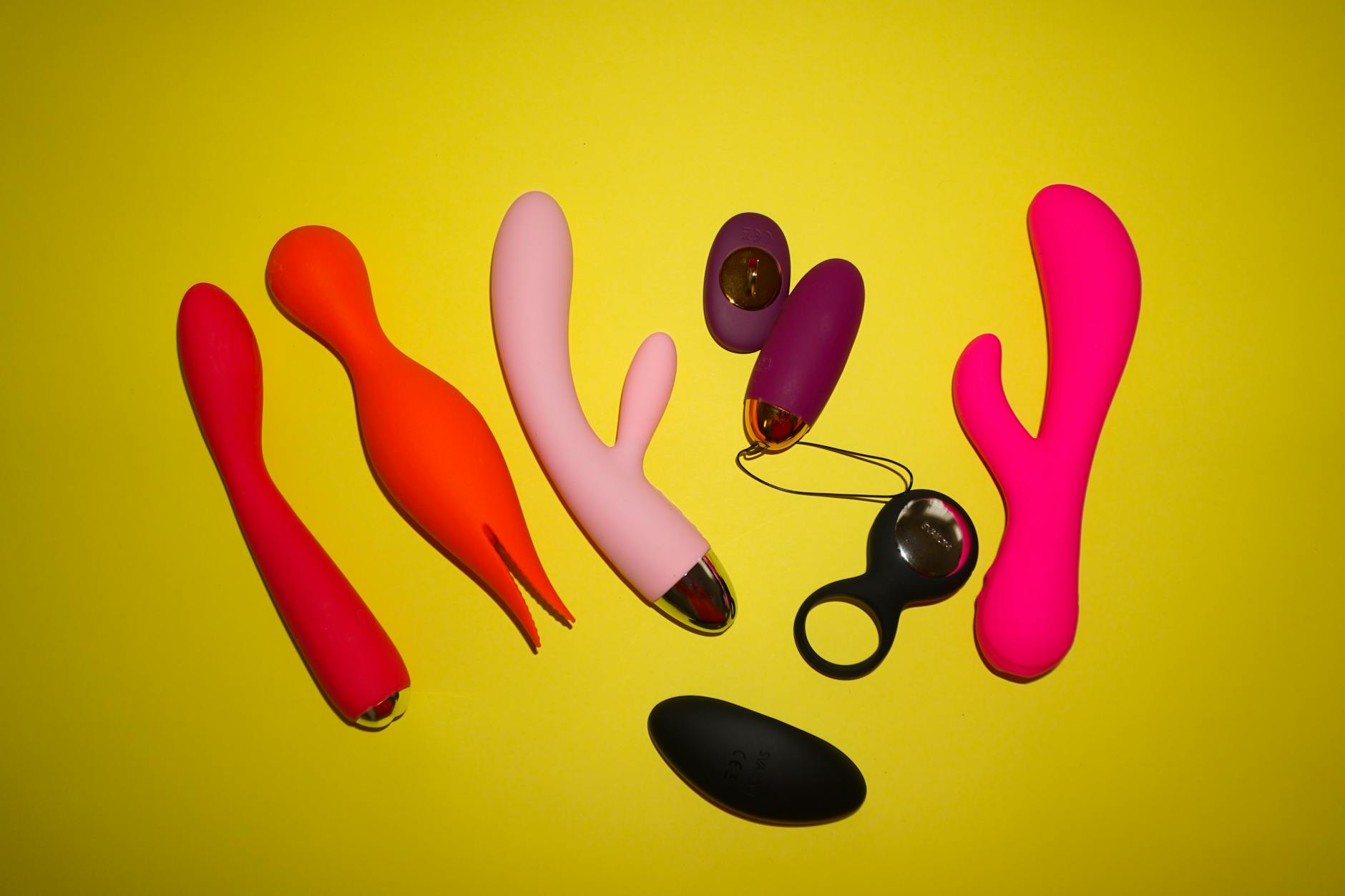
Let's start with what stress actually does
When you're fighting with your partner, your amygdala is lighting up like a Christmas tree. Your nervous system is in fight-or-flight mode. Cortisol is flooding your bloodstream. In that state, your body does not want sex. It wants safety.
This is not laziness. This is not low desire. This is biology protecting you from connection when your brain perceives threat. And here's the thing: until you address the nervous system piece, no amount of foreplay or toys will flip that switch.
But once you do address it, lemon sexual toys become genuinely useful again.
How stress literally kills libido
Three things happen when relationship tension runs high.
First, your vagus nerve goes offline. This nerve is your body's brake pedal for arousal. When you're stressed, it stops signaling that you're safe. Without that signal, your brain won't allow sexual response to happen, no matter what you're doing.
Second, cortisol tanks your testosterone. Yes, everyone has testosterone. It's the hormone that drives physical desire, not just for people with vulvas but across the board. Chronic stress suppresses it hard. You can have the best clitoral vibrator in the world, but if your testosterone is in the basement, your body won't generate the same intensity of response.
Third, your nervous system gets stuck in a loop. You're tense about the relationship. That tension kills desire. Then you feel broken or rejected because you don't want sex. That shame creates more tension. The loop tightens.
Breaking it requires something counterintuitive: you can't think your way out of it. You have to feel your way through it.
The nervous system reset (before the toy)
Honestly, the single most important step is not about lemon vibrators at all. It's about signaling safety to your body first.
Here are the things I recommend to clients whose desire has flatlined from relationship stress:
1. Regulate before you initiate. Spend 10 to 15 minutes in a practice that tells your nervous system: we are safe right now. That might be a walk outside, a bath, five minutes of box breathing (breathe in for four counts, hold for four, out for four, hold for four), or lying down with your hand on your heart. The practice matters less than the consistency. Your nervous system needs repeated evidence that you're not in danger before it will let pleasure back in.
2. Start solo, not partnered. When you're stressed about your relationship, partnered sex can feel like negotiation or obligation. That keeps you stuck in your head. Solo time with a lemon clitoral vibrator is different. You're not performing. You're not worrying about your partner's pleasure. You're just paying attention to what your body actually feels like, without pressure.
3. Go slow on intensity. If your desire has been flatlined for weeks, going straight to the highest setting on a vibrator can feel jarring. Start at pattern one or two. Let your body reacquaint itself with sensation gradually. This is not about efficiency. It's about teaching your nervous system that pleasure is safe again.
Why lemon clitoral vibrators work particularly well here
Once your nervous system is starting to settle, air-suction toys like the Lemon vibrator are particularly helpful because they work with your parasympathetic nervous system, not against it.
Traditional vibrators are intense and focused. When you're in a fragile state, that intensity can feel overwhelming. Lemon sexual toys use suction and rhythm instead of pure vibration. That pattern is gentler and more rhythmic. It feels less like an assault on your system and more like something that's meeting you where you are.
The rhythm of suction is also closer to the rhythm of your own body's arousal. It matches a natural build rather than forcing intensity. That matters when you're trying to rebuild trust in your own nervous system.
Start with the lowest setting. Use it without any narrative about what "should" happen. Just notice what you feel. After 10 to 15 minutes, stop, whether or not you've reached orgasm. Your job isn't to come. Your job is to rebuild the signal that pleasure is available and safe.
The conversation with your partner (the harder part)
Here's what I tell couples: your partner probably doesn't understand why you've gone cold. They might feel rejected. They might assume it's about them, when really it's about your nervous system.
But avoiding that conversation is what keeps the loop going.
You need to say something like: "I love you. I'm stressed about what happened between us, and my body has gotten stuck in a protective mode. It's not that I don't want you. It's that my nervous system doesn't feel safe yet. I'm working on that. Here's what would help." Then tell them: you're taking solo time to rebuild your relationship with your own body and pleasure. You need them to give you space without resentment. And eventually, once you've done that work, you want to rebuild this part of your connection together.
That is radically different from "I don't want sex right now" or worse, just going cold. It opens a door instead of closing one.
When to add your partner back in
After about one to two weeks of solo practice, most people start noticing a shift. Their body feels less guarded. Sensation comes back. The intensity creeps up on its own.
That's when you can consider involving your partner again, if you want to. And here's what matters: don't surprise them with the vibrator. Don't make it about making the sex better or faster. Instead, frame it as a tool for reconnection. Something you're excited to explore together.
The Lemon vibrator or other clitoral vibrators can be genuinely useful in partnered sex after stress because they take the pressure off both of you. Your partner doesn't have to achieve anything. You have a tool that helps your body access sensation again. It's collaborative rather than one person trying to fix the other.
The timeline is not linear
Here's what I wish someone had told me when I was early in my career: rebuilding desire after relationship stress is not a straight line. You'll have days where you feel it coming back, and then a difficult conversation happens and you're back at zero.
That's normal. That's not failure. That's your nervous system doing exactly what it's supposed to do.
But each time you go through the cycle, your body gets faster at recovering. Your nervous system learns: "Oh, we fought. We apologized. We're okay." And the shutoff valve loosens a little bit.
Lemon sexual toys are most useful in this context not as a miracle fix, but as a consistent signal to your body: you still deserve pleasure. Even when things are hard. Even when you're navigating rough patches. Even when desire feels far away. The act of taking 15 minutes for yourself, with a tool that feels good, is its own kind of healing.
What not to do
Don't use a vibrator to try to skip the nervous system work. You'll just feel frustrated and more broken.
Don't introduce it without talking to your partner first if you're in a relationship. Surprise sex toys often read as rejection or avoidance, not adventure.
Don't expect immediate results. Desire doesn't flood back in a week. It rebuilds gradually, with consistency.
Don't ignore the relationship piece while you're fixing the pleasure piece. They're linked. You can use the best lemon vibrator ever made, but if the tension in your partnership is still active, your body will keep the brake on.
What you're rebuilding is not just physical pleasure. It's trust in your own nervous system and trust in the safety of your relationship. That takes time, honesty, and real work from both people. Tools help. They don't do the work alone.
FAQ: Stress, desire, and toys
How long does it typically take for libido to return after relationship stress?
It depends on the severity of the conflict and whether the underlying issue has been addressed. For minor stress, desire can start returning in one to two weeks with consistent nervous system regulation. For more significant conflict, it can take four to eight weeks. The timeline isn't about the toy. It's about whether both people are genuinely working to rebuild safety and trust.
Can I use a lemon clitoral vibrator if I'm still angry at my partner?
Yes, and you should. Anger is a sign your nervous system is still in protection mode. Using a vibrator solo while you're still processing anger is actually helpful. It tells your body: I'm taking care of myself. I deserve pleasure even in hard times. This isn't about forgetting the anger or rushing past it. It's about not letting anger convince you that you don't deserve to feel good.
Should my partner be present when I use lemon vibrators after we've fought?
Not initially. Solo time is critical for nervous system regulation. After one to two weeks of solo practice, if you're both interested, you can explore using it together. But the first phase is about you rebuilding your own trust in pleasure, not about performing for anyone else.
What if using a vibrator brings back anxiety about the relationship?
That's worth noticing. It might mean your nervous system isn't ready yet, or it might mean there's something unresolved between you and your partner that a vibrator can't fix. In that case, the tool to reach for is a conversation or a therapist, not a stronger vibrator. Toys are amplifiers, not healers. They work best when the relational foundation is being actively repaired.
Can stress really suppress desire that completely, or is it something else?
Stress absolutely can. Cortisol, the main stress hormone, directly suppresses testosterone and disrupts the vagal signaling that allows arousal. But yes, it's also possible that something else is happening: depression, birth control changes, medication side effects, or deeper relationship incompatibility. If desire stays flatlined even after the acute stress passes, it's worth checking in with a doctor or therapist about what else might be going on.
Is it normal to feel guilty using a toy when my partner is hurt?
Completely normal, and completely worth examining. That guilt often comes from a belief that you should be suffering alongside your partner, or that taking pleasure away from conflict means you don't care about the relationship. Neither is true. Taking care of yourself while you repair the relationship is actually what trust looks like. It says: I matter. We matter. And I'm not going to punish myself while we work this out.
The real work
Lemon vibrators are genuinely useful tools for reconnecting to pleasure after relationship stress. But they're useful because they give you a low-pressure way to tell your nervous system: we're safe here. We deserve to feel good.
The actual healing, though, lives in the conversations you have with your partner. In the willingness to say what actually hurt. In the genuine effort to rebuild what broke. In the patience with your own body as it slowly learns that it's safe to open again.
The toy is the ritual. The relationship work is the substance. Do both, and most people find their way back. Skip the relationship part and just buy better toys, and you'll stay stuck.
Your pleasure matters. Your partnership matters. And right now, they need equal attention. Start there.