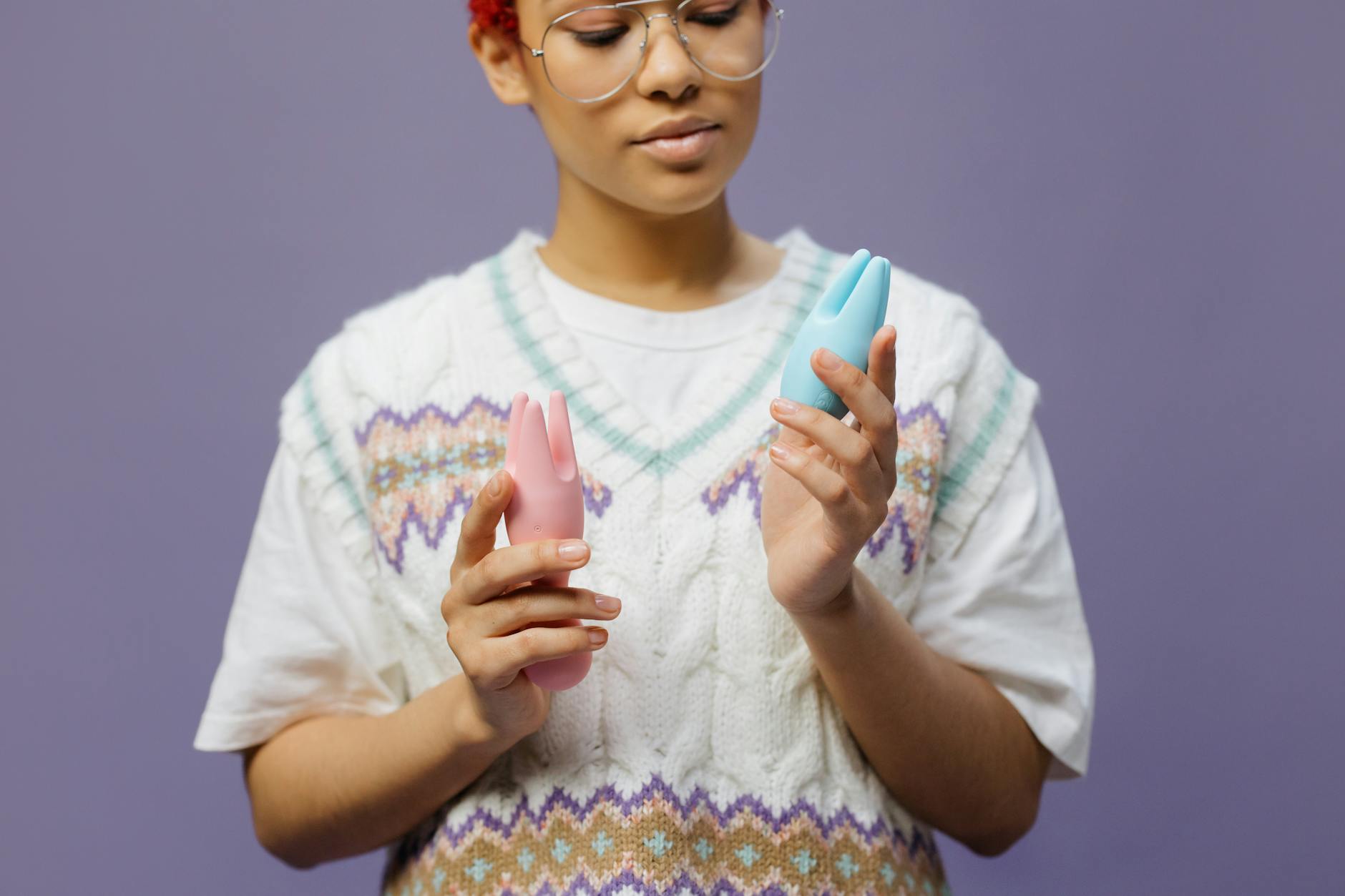
How to Use Lemon Vibrators for Better Orgasms After Forty
Here's what nobody tells you: your orgasms might actually get better after forty.
I work with couples across midlife transitions, and one of the most consistent things I hear from people over 40 is that their orgasms became more reliable, more intense, and more under their own control than they'd ever been before. Not fewer, not softer. Better.
The catch is that getting there requires understanding what's actually changed about your body and your nervous system, and then using tools that match your physiology now, not at 25.
What actually changes about orgasm after forty
Let's separate mythology from biology. Your brain doesn't decline. Your clitoral nerve density doesn't drop. Your capacity for pleasure is completely intact.
What does shift: blood flow patterns, the speed of arousal, and how your pelvic floor responds to stimulation. If you've always relied on one particular pattern or speed, it might take you longer to get there now, or the sensation might feel slightly different in its peak.
For many people, this is genuinely good news. You're not chasing novelty for its own sake anymore. You know what you want. You're less self-conscious about taking time. And you've probably spent decades learning your body in ways you didn't at 20.
Why suction (and air-pulse technology) works differently after forty
Lemon clitoral vibrators use suction rather than direct vibration. This matters wildly as you age.
With traditional vibrators, the stimulation happens through friction and frequency. Your body has to meet that consistent rhythm. Suction works the opposite way. It creates a gentle pulling sensation that your nervous system reads as a deepening of arousal rather than a surface-level buzz.
After forty, this shift is significant because:
Your clitoral tissue becomes less responsive to pure vibration alone. It's not weaker; it's different. The sensory receptors are still there, but they respond better to sustained, varied stimulation than to the same beat for ten minutes straight.
Suction tech lets you build intensity without increasing pressure. You can stay in a low-intensity setting for longer, letting arousal build gradually, then shift patterns to intensify without ever moving into the numbing-out range that can happen with ultra-high vibration speeds.
Your nervous system calms down faster. At twenty, you might have needed constant high-frequency input to reach orgasm. After forty, many people find that a slow climb with pattern variation actually lets them stay present longer and orgasm more deeply.
You're not trying harder. You're working smarter with your body's actual design.
The warm-up window expands, and that's actually the gift
One of the biggest shifts I see in people over forty is that arousal takes longer. Where you used to get there in five minutes, now it might be twelve or fifteen.
Most people experience this as a loss. Actually, it's a gateway.
A longer arousal window gives your parasympathetic nervous system more time to settle in. You're not rushing toward an endpoint. You're actually feeling more of the journey. And when you reach orgasm from a place of deeper relaxation, the orgasm itself tends to be stronger and longer.
With a Lemon clitoral vibrator, I usually recommend:
Start at pattern 1 or 2, not pattern 4. Let yourself be aroused for ten minutes before you even think about intensifying.
Use this time to explore what feels different. Your body knows things at forty that it couldn't know at twenty. What's the difference between tingling and building? Between pressure and pulling? You're not just chasing the finish line; you're mapping the terrain.
Switch patterns two or three times before you orgasm. This gives your nervous system variation, which keeps sensation sharp and prevents the numbness that can happen with one single setting for too long.
If you've been struggling with sensation after childbirth or hormonal shifts, this expanded warm-up window is particularly valuable. It gives your body permission to take the time it needs.
Pelvic floor changes and what to do about them
After forty, your pelvic floor holds tension differently. This isn't weakness; it's a shift in how the muscles coordinate around arousal.
Many people over forty discover that their orgasms feel more concentrated, more in one specific spot, rather than the full-body experience they might have felt younger. Some people prefer this. Others miss the diffuse sensation.
Here's what helps:
Learn to consciously relax your pelvic floor before you start. Spend two minutes doing reverse Kegels. breathe deeply and actively soften the muscles you'd normally tighten. This preps your nervous system for receiving sensation rather than gripping around it.
Vary your body position. If you always orgasm lying down, try sitting up or kneeling. Different positions recruit different pelvic floor muscle groups, which can change the sensation entirely. Sometimes you'll discover an orgasm style you've never experienced before.
Don't judge if the orgasm feels different. After forty, some people have multiple smaller orgasms instead of one big one. Some have one longer, rolling orgasm. Some find that the buildup is more pleasurable than the release. None of these are wrong.
When you're using lemon vibrators specifically, the suction technology actually helps here because it doesn't require your pelvic floor to work as hard. You're not trying to grip around vibration; you're simply receiving a gentle pulling sensation. This often makes it easier to stay relaxed and present.
The mental and emotional piece is half the equation
Here's where I see most people miss the real opportunity.
After forty, you often have clarity you didn't have before. Fewer performance pressures. Sometimes freedom from fertility concerns. More acceptance of your own body and desires. But that clarity also means you can feel your anxiety more acutely, or your disconnection from your body, or your anger at a partner, or your grief about time passing.
If your orgasms feel muted or difficult after forty, it's worth asking whether the issue is physical or emotional. Often it's both at once, and a lemon clitoral vibrator can't solve the emotional part alone.
But here's what it can do: it can create a reliable, low-pressure entry point for pleasure while you're also working on the emotional side. You're not waiting until you feel perfectly connected to start exploring sensation. You're using sensation to rebuild connection.
If you're rebuilding intimacy after time apart or you're noticing that pleasure has gotten harder to access, start with solo exploration first. Let yourself relearn your body without the pressure of a partner's presence or timeline. Then bring that knowledge back into partnered sex.
Practical settings and sequences that work after forty
I'm going to give you a specific framework because generalities don't help when you're actually lying there trying to figure out what to do.
Session One: Exploration (15 minutes)
- Pattern 1, medium suction, 3 minutes
- Pattern 2, medium suction, 3 minutes
- Pattern 3, medium suction, 3 minutes
- Drop back to Pattern 1 or 2, increase suction slightly, 6 minutes
Don't aim for orgasm. Aim for data. What feels good? What feels repetitive? Where do you want more intensity?
Session Two: Building (15 minutes)
- Pattern 1, low suction, 8 minutes (this is your warm-up)
- Pattern 2, medium suction, 3 minutes
- Pattern 3, high suction, until orgasm
Session Three: Variation (20 minutes)
- Pattern 1, low suction, 10 minutes
- Shift positions or angle
- Pattern 2, medium suction, 5 minutes
- Pattern 3, high suction, until orgasm
After you've done these three, you'll have a sense of what your body actually needs. You can then customize from there.
Why some orgasms fail to arrive (and how to fix it)
One of the most frustrating shifts after forty is when you're doing everything right, you feel present, you're using a tool that usually works, and then the orgasm just... doesn't come.
This happens more often after forty than it did younger. It's not a sign you're broken. It's usually one of three things:
Your nervous system is still in fight-or-flight. You might feel relaxed, but your body is managing some low-level stress. Solution: try again tomorrow. Sometimes your body just isn't ready.
You're in the wrong pattern for today. Your body's needs change throughout your cycle and throughout the week. What worked Tuesday might not work Friday. Solution: have flexibility. Spend the first five minutes trying different patterns rather than committing to one.
You're trying too hard. This is particularly common after forty because you've had enough time to develop performance anxiety around your own pleasure. Solution: give yourself explicit permission to stop. Pleasure without an endpoint is still pleasure.
When to know you might need additional support
None of this is medical advice, but I do want to flag: if pain appears during or after orgasm, or if your orgasms completely disappeared and aren't returning even with a month of regular exploration, it's worth checking in with a healthcare provider who specializes in midlife sexual health.
Sometimes things like hormonal shifts or medication side effects need professional support. A good doctor can rule out or address those things while you're also exploring pleasure on your own terms.
But if you're just noticing that orgasm feels different, or takes longer, or requires different stimulation than it used to? That's not broken. That's called getting older with a body that still works.
The real shift after forty
Here's what I tell couples in my practice: after forty, pleasure stops being about performance and starts being about presence.
You're not trying to have the biggest orgasm or the fastest orgasm. You're trying to feel alive in your body for fifteen minutes. And honestly, for most people, that's when sex actually gets good.
Lemon clitoral vibrators, designed specifically with suction technology, just make that process easier. They work with your body's actual physiology instead of against it.
FAQ: Your questions answered
Do orgasms always take longer after forty?
Not necessarily. Some people notice a change; others don't. What does tend to shift is what triggers orgasm. You might need different stimulation, more time in warm-up, or a different frame of mind. Once you understand what your body actually needs now, you can build toward orgasm reliably.
Can a lemon clitoral vibrator help if I've never been able to orgasm easily?
Possibly, but it's not a magic fix. If you've struggled with orgasm your whole life, the issue might be physiological, neurological, or psychological. A healthcare provider who specializes in sexual health can help you figure out what's happening. That said, suction technology does work differently than vibration, so it's worth trying if you haven't before.
Is it normal for orgasms to feel different at different times of the month?
Completely normal. Your body's response to stimulation shifts based on where you are in your cycle, your stress level, your sleep, your hormones, and a dozen other factors. Rather than expecting consistency, expect variation and stay curious about what each experience teaches you.
What if my partner wants to be involved but I feel self-conscious?
Your pleasure is your responsibility first. Explore on your own, learn what works for you, and then you can bring that knowledge into partnered sex. You're not obligated to perform discovery work while someone watches. Solo exploration gives you freedom and confidence that usually translates directly into better partnered sex.
Do I need to use a lemon vibrator every time?
Nope. Some people use it sometimes. Some people use it every time. Some people use it for a few weeks and then find they don't need it anymore because they've relearned their body. Pleasure is supposed to be flexible. Use it as a tool when it helps, not as a requirement.
What if nothing works and I feel broken?
You're not broken. Your body might need different things at different times. Your nervous system might need support that isn't sexual. Your hormones might need medical attention. Your relationship might need repair. Your pleasure is complicated, and sometimes that requires multiple approaches at once. That's not failure; that's just being human after forty.