
Let's talk about the thing everyone's thinking but not saying
If you're with multiple partners, your pleasure belongs to you first. That's not selfish. That's the foundation. And yet most people with multiple partners end up contorting their pleasure around what feels safe to each relationship, which means no one gets the whole version of you. Here's the hard truth: that doesn't work.
Using a clitoral vibrator like the Lem across different relationships requires honesty you might not expect. Not just with partners, but with yourself about what you actually want and what you're willing to negotiate. This guide walks you through that.
The solo foundation first
Before bringing a vibrator into any relationship, you need to know what it does for you alone. This sounds obvious until you realize most people skip this step entirely. They buy a lemon vibrator because their partner suggested it, or because they're curious, but they've never actually explored what they enjoy without anyone else's rhythm, preference, or anxiety in the room.
Solo exploration matters especially if you're partnered with multiple people. It's the only time your pleasure isn't competing for space. Spend 2-3 weeks using your vibrator alone. Different times of day, different patterns, different intensities. Notice what your body actually wants, not what you think you should want. The clitoral vibration from a device like the Lem works differently when you're not thinking about someone else's experience.
You'll notice your preference for intensity, pattern, duration, and whether you want to orgasm or just feel sensation. That data becomes the anchor. Everything else is a negotiation from a place of knowing yourself.
When you want to use it with one partner but not another
This is the conversation that breaks people. Partner A is excited about toys, Partner B thinks they're unnecessary, and suddenly you're hiding a vibrator like contraband. Here's what I see happen: people choose one partner's comfort over their own pleasure, every time.
Instead, separate the emotional conversation from the practical one. "I want to use vibrators in our sexual time together" is different from "I feel like you don't want me to enjoy myself." The second one is about reassurance you can't get from a toy. The first is a logistics question.
With Partner A, the conversation might be: "Here's what I like about using the Lem. Here's how I want to incorporate it. What are you curious about?" You're inviting them into something specific, not asking permission.
With Partner B, the conversation is different: "Using a vibrator is important to my pleasure. This isn't about you or what you can or can't do. This is about me taking care of myself." Then you decide: do you use it in solo time? Do you use it during time with them anyway? Can you compromise on when, or is this non-negotiable?
There's no universal answer. But there's a pattern I watch work: partners usually soften when they understand it's not a referendum on them.
The practical logistics that nobody discusses
Here's what I hear from people managing multiple relationships: "Where do I even keep it?" Sounds mundane. It's actually the thing that determines whether you use it or just feel guilty about owning one.
If you're with Partner A at their place most weekends and Partner B on weeknights, you need a clear system. Some people keep a vibrator at each place. Some people travel with one and have a privacy agreement with all partners. Some people use solo time specifically to be with themselves and their devices, no apologies.
Pick a system that doesn't require you to hide or lie. That's the actual test. If you're sneaking a vibrator the way someone hides an affair, something's wrong in that relationship, and the vibrator isn't the problem.
Care also gets complicated. The Lem and other lemon sexual toys need to be cleaned after each use, charged properly, and stored in a dry place. If you're managing multiple devices or sharing a space with partners, write down the care routine and stick to it. It prevents resentment that gets coded as "you never take care of things."
When partners want to be involved differently
In polyamorous or non-monogamous structures, desire for involvement with toys varies wildly. Partner A might want to watch you use the Lem. Partner B might want to use it on you. Partner C might not want it anywhere near the bed. That's all fine as long as you're clear.
The mistake people make is assuming everyone wants the same level of involvement. They bring out the clitoral vibrator and suddenly the room feels awkward because nobody established what this moment was supposed to be.
Before sex or pleasure time, have a micro-conversation: "I want to use my vibrator. Do you want to be involved or have space?" That's it. No shame attached to either answer. Involved might mean they're watching, touching you while you use it, or using it on you. Space might mean they're in the next room or that this is solo time that happens to be scheduled during time together.
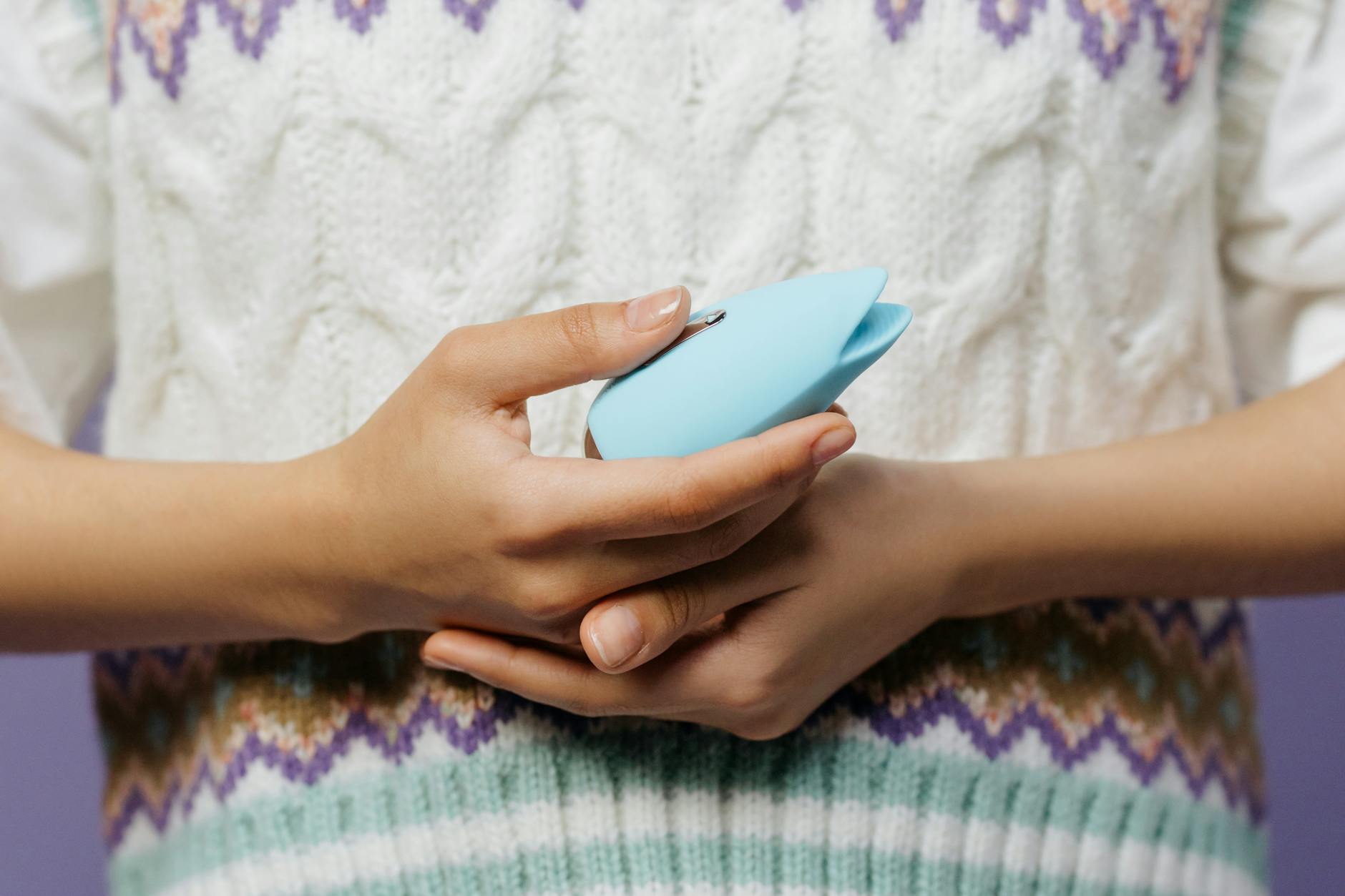
Photo by cottonbro studio on Pexels
One detail that helps: using lemon adult toys doesn't have to mean you're not intimate with your partner. You can use a vibrator while they're touching you elsewhere. You can use it and then have other kinds of sex. You can use it and just rest together after. The vibrator is one tool in a bigger conversation, not the main event unless you decide it is.
The emotional work underneath the logistics
I'll be direct: if you're using multiple partners as a way to avoid being alone with your own pleasure, a vibrator won't fix that. If you're switching between partners partly because nobody fully satisfies you and you're hoping a toy will bridge the gap, that's a different conversation entirely. Sometimes we use relationship complexity to avoid intimacy, and pleasure devices become part of that pattern.
Check in with yourself: Are you with multiple partners because that's what you authentically want? Or are you scattered because being focused on one person's pleasure (or your own) feels too vulnerable?
If it's the first one, using lemon vibrators across those relationships gets cleaner. If it's the second, the work is internal before the vibrator helps.
When you need to set a boundary
Sometimes a partner will push back hard. "I don't want you using that," or "That makes me feel inadequate," or worse, "You can't use it when you're with me." That's not a preference. That's a boundary violation masked as insecurity.
Your pleasure is not negotiable. Your method is. So here's the distinction: if a partner says "I don't feel comfortable with vibrators in our sexual time, but I'm okay with you using it solo," that's a negotiation. If they say "No vibrators ever," that's a control issue.
You get to decide if that boundary is livable for you. Some people say, "Okay, this relationship doesn't include vibrators, and that works for me." Others say, "This is non-negotiable for me, so we need to either work through your discomfort or acknowledge this relationship has a conflict I can't resolve."
Both are honest answers. The problem is pretending it's workable when it isn't, because then you're managing someone else's feelings at the cost of your own body.
The ongoing conversation
Using lemon clitoral vibrators across multiple relationships isn't a one-time decision. As relationships shift, as people move in together or apart, as life changes, the conversation needs to happen again. What worked with Partner A when you were long-distance might feel different if you move in together. What Partner B was uncomfortable with might shift over time.
Check in annually or whenever things change. "How do you feel about how we're managing pleasure devices now?" Sounds awkward when you write it out, but it prevents resentment from building in the spaces you don't talk about.
The couples and groups that handle multiple partners well aren't the ones with perfect compatibility. They're the ones who keep talking, who check assumptions, and who stay willing to adjust when something isn't working. Vibrators are part of that conversation, not separate from it.
A note on shame
Here's what I notice: people with multiple partners often feel extra shame about masturbation or solo pleasure. Like if you're already with multiple people, you should be satisfied, so wanting solo time with a vibrator reads as "greedy" or "something's wrong with the relationships." That's cultural garbage.
Your pleasure, solo or shared, is yours. Using a lemon vibrator doesn't diminish anyone else. Having multiple partners doesn't mean you owe anyone constant availability to your body. The two things are separate.
Give yourself permission to want what you want without the running commentary. That's where the real freedom is.
People also ask
Is it okay to use the same vibrator with different partners?
Yes, as long as you clean it between uses. Use water-based lube, wash with warm water and toy cleaner after each partner, and dry completely before storing. You can also decide that each partner gets their own device, or that you use it only solo. It's your call. The important thing is that everyone involved knows and agrees to the arrangement.
What if one partner feels replaced by the vibrator?
This usually means the conversation you had wasn't clear enough. A vibrator can't replace a partner. It does a specific thing: it delivers consistent clitoral stimulation. Your partner does something completely different: they offer presence, emotional connection, and reciprocal pleasure. Explain that clearly. If they're still struggling, ask what specifically feels threatening. Often it's not the vibrator itself but fear that they're not enough, which is a deeper conversation that a toy can't solve.
Can I use a vibrator in a triad or group dynamic?
Absolutely. The same logistics apply. Before you're intimate, establish who wants to be involved with the vibrator and how. Some groups have one toy shared by everyone. Some people bring their own. Some groups decide vibrators are solo-only. There's no wrong setup as long as everyone consents and knows what's happening.
How do I talk to a new partner about my vibrator habit?
Don't wait until you're in bed. Mention it naturally: "I use vibrators for pleasure. That's something I do solo and potentially with partners depending on what they're comfortable with." Most people appreciate the directness. Some will be excited. Some will need reassurance. That conversation early saves months of awkward discovery and unspoken resentment later.
What if multiple partners want to be involved at the same time?
That's a logistics and pleasure question. You get to decide if you want that experience or not. Some people love it. Some find it overstimulating or complicated. Both are valid. If you do go there, the same rule applies: clarity first. Talk through who touches where, what the vibrator is doing, what happens if someone feels left out. Then consent all around before anything starts.
Does using a vibrator mean I'm less satisfied with my partners?
No. Using a vibrator means you're taking care of your own pleasure in the way that works for your body. Some people orgasm more easily with vibration. Some people need different kinds of stimulation from different partners. Some people just love the sensation. It's not a referendum on anyone else. Stop looking for a reason to feel bad about it.
You deserve pleasure on your terms
Whether you're with one partner or five, a lemon vibrator is a tool for your body. The hard part isn't the tool itself. It's giving yourself permission to want what you want, to speak clearly about it, and to walk away from relationships that can't make space for your pleasure.
That's the real work. The vibrator's just the beginning.
If you're navigating these conversations and feeling stuck, that's what a conversation with a relationship counselor can help with. You might also explore how to rebuild intimacy with a partner when communication has broken down, or read more about navigating pleasure when anxiety gets in the way.
Your body, your pleasure, your rules.