
How to Use Lemon Vibrators When You Have Vaginismus or Penetration Anxiety
Let's be real: vaginismus is exhausting. Your body involuntarily tightens around anything trying to enter. Sex becomes something you're bracing for instead of enjoying. And the shame loop that follows—feeling like your body is broken, like you're failing your partner, like you're somehow less sexual—is often more painful than the physical response itself.
Here's what matters: vaginismus is treatable. And clitoral vibrators like those from Lemon Sexual Toys can be a core part of your recovery toolkit, not because they "fix" penetration, but because they help you remember that pleasure exists outside of it.
What vaginismus actually is (and what it isn't)
Vaginismus is an involuntary contraction of the pelvic floor muscles. It's a protective reflex, not a choice. Your nervous system has learned that penetration = threat, so it locks down. This can happen for psychological reasons (past trauma, anxiety, relationship conflict), physical reasons (pain history, infection, hormonal changes), or both tangled together.
It is not:
- A sign you don't want sex
- A reflection of your desire
- Something you can "relax away" through willpower
- Proof you're asexual or frigid (both ridiculous terms)
It's a nervous system response that can shift once you rebuild safety, which is exactly where Lemon vibrators come in.
Why clitoral vibrators work differently for vaginismus
The genius of clitoral stimulation when you have vaginismus is that it completely sidesteps the trigger. Your clitoris doesn't require penetration to respond. You're not asking your body to do the thing it's locked against. You're activating pleasure pathways that have nothing to do with the threat your nervous system is protecting against.
This does two crucial things:
First, it decouples pleasure from penetration. For years, you may have believed the only "real" sex is penetrative sex. Clitoral vibrators remind you that pleasure is multi-dimensional. An orgasm from a Lemon vibrator is not a consolation prize. It's a full experience with its own intensity and satisfaction.
Second, it calms your nervous system. When you experience pleasure without the trigger present, your brain learns new information: intimacy can be safe. This is not therapy, but it's neural re-education. Repeat a safe, pleasurable experience enough times and your threat response begins to soften.
How to start if you have vaginismus
The goal is not to "work toward penetration" right away. The goal is to build a baseline of pleasure and safety. Here's the practical progression:
Solo first
Begin alone. No partner, no pressure, no stakes except your own curiosity. Explore your clitoris with a Lemon vibrator (the Lem is designed for precision, which helps if you're sensitive to overstimulation). Start with the lowest setting. Spend time getting to know what intensity feels good, what patterns feel good, where you like to be touched.
This matters because vaginismus often comes with disconnection from your own body. You've been in a conflict with it. Rebuilding that relationship happens in privacy, at your pace.
Pace and pattern matter
Don't rush to orgasm. Spend 15-20 minutes just exploring sensation. Notice what happens to your breathing, your pelvic floor, your overall sense of ease. Some people find that their pelvic floor relaxes with certain patterns and tightens with others. That's data.
If your pelvic floor tightens during stimulation, pause. Breathe. Let it release. You're teaching your body that sensation doesn't have to trigger protection.
Introduce it with a partner (if you have one)
Once you're comfortable using a Lemon vibrator alone, you can involve a partner. The script is simple: "I'd like to show you what feels good." You guide the vibrator, they watch or hold you, and the focus is on your pleasure and your comfort level.
This flips the typical dynamic. Usually with vaginismus, the partner is doing the work and you're anxious about whether you can "accommodate" them. Here, you're in control. You're directing. You're showing them your pleasure.
What comes next depends on you
Some people with vaginismus go on to enjoy penetration. Some don't, and their sex lives are full and satisfying anyway. The pressure to "overcome" vaginismus by achieving penetration is part of what keeps the cycle going.
If you do want to work toward penetration, that's a separate, slower journey often best supported by a pelvic floor physical therapist or sex therapist. But the clitoral vibrator work is not a stepping stone to that. It's valid on its own.
Managing the mental part
Vaginismus lives at the intersection of body and mind. The physical relaxation matters, but so does what you're thinking while your pelvic floor is tightening.
You might be carrying beliefs like: "I should be able to do this," "My partner will leave if I can't have penetrative sex," "Something is wrong with me," "I'm not a real woman/man." These thoughts keep the nervous system in alarm mode.
Working with a therapist who understands vaginismus (sex-positive cognitive behavioral therapy is evidence-based for this) can help untangle the mental component. But in the moment, when you're with a Lemon vibrator, the practice is simpler: notice the thought, thank your brain for trying to protect you, and gently return to sensation.
The partner conversation
If you have a partner, they need to understand three things:
- Vaginismus is not rejection of them.
- Pressure to perform (or pressure to penetrate) makes it worse.
- Their role is to support your exploration, not to fix you.
Many partners want to help and feel helpless. Giving them a specific role—learning which vibrator patterns you like, understanding that your pleasure is the goal, being present without pushing—gives them something constructive to do.
Timeline expectations
Some people notice their pelvic floor response shifting after a few weeks of regular clitoral stimulation. Others take months. Some notice the mental shift first (less anxiety around sex) and the physical response follows.
There is no "should" timeline. Your nervous system learned to protect you for a reason. It will unlearn at its own pace. Patience with yourself is not optional.
When to get professional support
If vaginismus is severe (penetration is completely impossible, even with a tampon), work with a pelvic floor physical therapist. They can assess whether there's muscular tension or structural involvement that needs hands-on care.
If the anxiety is intense or trauma-based, a sex therapist or trauma-informed therapist is worth the investment. Clitoral vibrators are a helpful tool, not a replacement for professional care.
The bigger picture
Vaginismus tells you something important: your body is responsive to threat and safety. That's not broken. That's adaptive. Once you understand what your nervous system is doing, you can work with it instead of against it.
Clitoral vibrators from Lemon Sexual Toys give you a way to practice safety and pleasure in parallel. You're not pushing through pain or forcing relaxation. You're gently, repeatedly showing your nervous system that sensation can be pleasurable, that your body can be trusted, and that your pleasure matters.
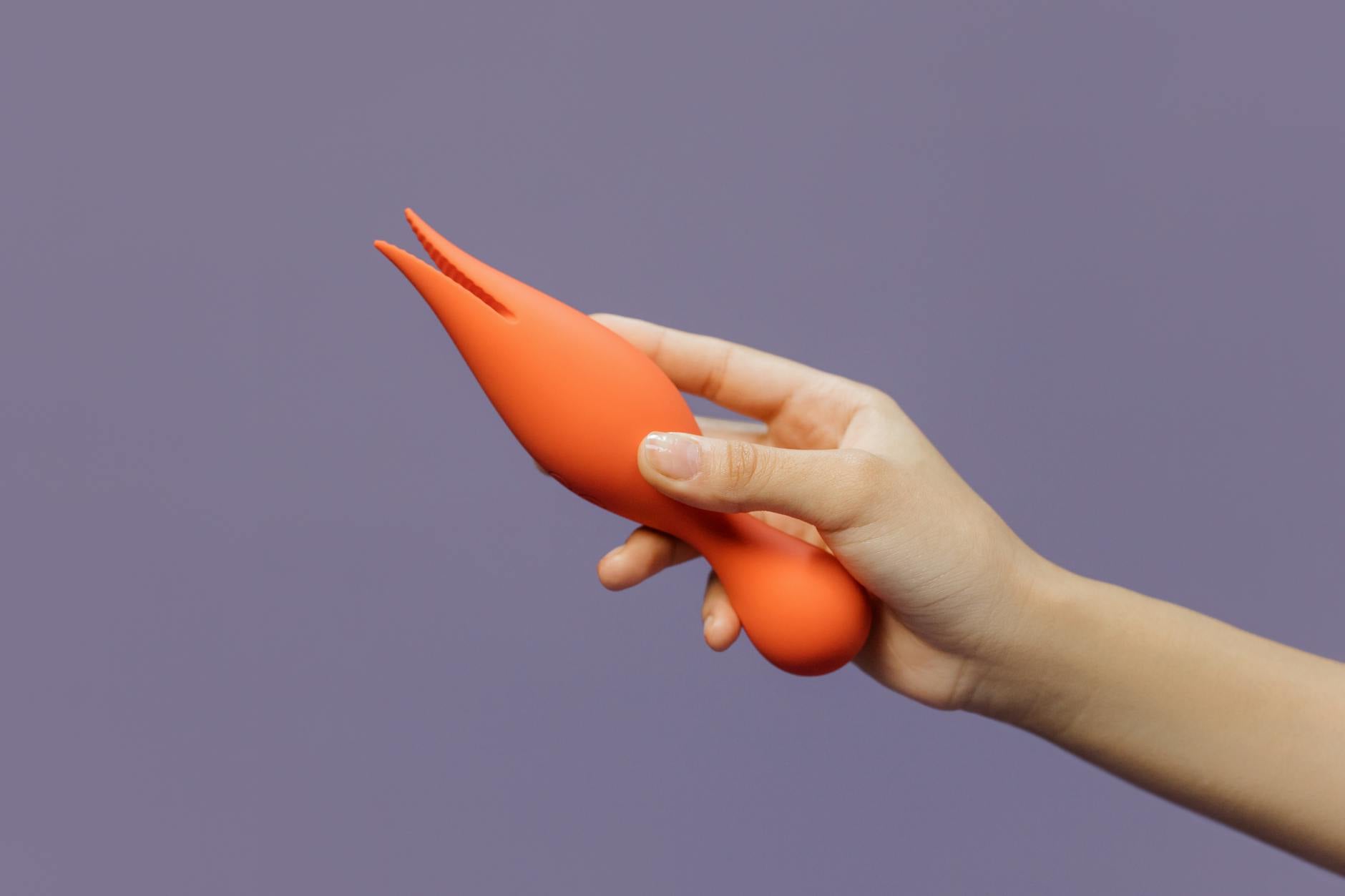 Photo by cottonbro studio on Pexels
That's where recovery begins.
Frequently Asked Questions
Can I use a vibrator if I have vaginismus?
Yes, absolutely. In fact, clitoral vibrators are often recommended for people with vaginismus because they bypass the trigger (penetration) and activate pleasure pathways safely. Lemon vibrators are designed with variable intensity, so you can start low and work at your own pace.
Will using a vibrator help me overcome vaginismus?
It can be part of the solution, but it's not a cure on its own. Vaginismus usually needs a multi-pronged approach: nervous system work, sometimes pelvic floor physical therapy, possibly therapy for anxiety or trauma, and partner communication if you have one. Clitoral vibrators help by decoupling pleasure from penetration and giving your nervous system safe experiences to build on.
Should I use a vibrator alone or with my partner first?
Start alone. This removes pressure and lets you reconnect with your own body without performance anxiety. Once you're comfortable and know what feels good, introducing a partner can deepen the experience. But solo exploration first is gentler.
What if the vibrator makes my pelvic floor tighter?
That's okay and fairly common. Pause, breathe, and let your pelvic floor release. You're teaching your body that sensation doesn't require protection. Some people find that slower patterns or lower intensities feel less triggering. Experiment to find what your nervous system responds to.
Is it normal to not have an orgasm at first?
Completely normal. With vaginismus, your pelvic floor may be so habitually tense that relaxing enough for orgasm takes time. The goal is not orgasm. The goal is pleasure, ease, and gradually retraining your nervous system. Orgasms often come later, once safety is established.
Will my partner feel left out if I use a vibrator and they can't penetrate?
Not if you frame it clearly. Many couples find that incorporating a clitoral vibrator becomes a shared experience. Your partner can watch, hold you, kiss you, or participate in other ways while you use the vibrator. The focus shifts from what they can't do to what you can both enjoy together.
How long does it usually take to see improvement?
It varies widely. Some people notice their anxiety decreasing after a few weeks. Physical changes to pelvic floor tension can take 6-12 weeks of consistent practice. The key is consistency and patience. You're rewiring a protective response, which doesn't happen overnight.
If you're navigating vaginismus, please know you're not alone and you're not broken. Your body is trying to protect you, and that response can shift. If you'd like to talk through your specific situation or need guidance on next steps, reach out to us at Lemon Sexual Toys. We're here to support your journey toward pleasure on your terms.