Let's be real about mismatched desire
One of you wants sex twice a week. The other wants it twice a month. Neither of you is wrong, and yet somehow this gap has become a source of shame, resentment, and silence between you. That's the part nobody warns you about mismatched libidos. It's not the actual mismatch that breaks couples. It's what the mismatch gets tangled up with. Rejection. Inadequacy. The feeling that your body has become a problem your partner has to solve.
Here's the thing: mismatched sex drives are genuinely common. Research from the Kinsey Institute shows that 34% of women and 15% of men report low sexual desire, and in committed relationships, at least one partner has a lower drive in roughly half of all couples. The data is clear. The shame isn't justified, even though it feels that way.
So where does Lemon Sexual Toys fit into this? It's not about forcing more sex. It's about untangling desire from obligation, and giving the higher-desire partner a way to feel satisfied without turning the lower-desire partner into a reluctant participant. That shift changes everything.
The problem with "just compromising"
Most couples try to solve mismatched desire the way they solve most conflicts. You meet in the middle. You schedule sex. You take turns initiating. And yet something still feels off, because you're not actually solving the mismatch. You're just both showing up half-satisfied.
The higher-desire partner feels guilty for wanting more. The lower-desire partner feels pressured, which kills desire even further. You're stuck in a loop where sex becomes another obligation, like paying bills or planning vacations. And obligation is the death knell for pleasure.
Here's what I see in my practice: when couples stop trying to match each other's drives and start giving each other permission to meet their own needs, the relationship pressure drops completely. The lower-desire partner stops feeling like they're failing. The higher-desire partner stops feeling like they're annoying. And both of you suddenly have room to breathe.
How Lemon vibrators change the dynamic
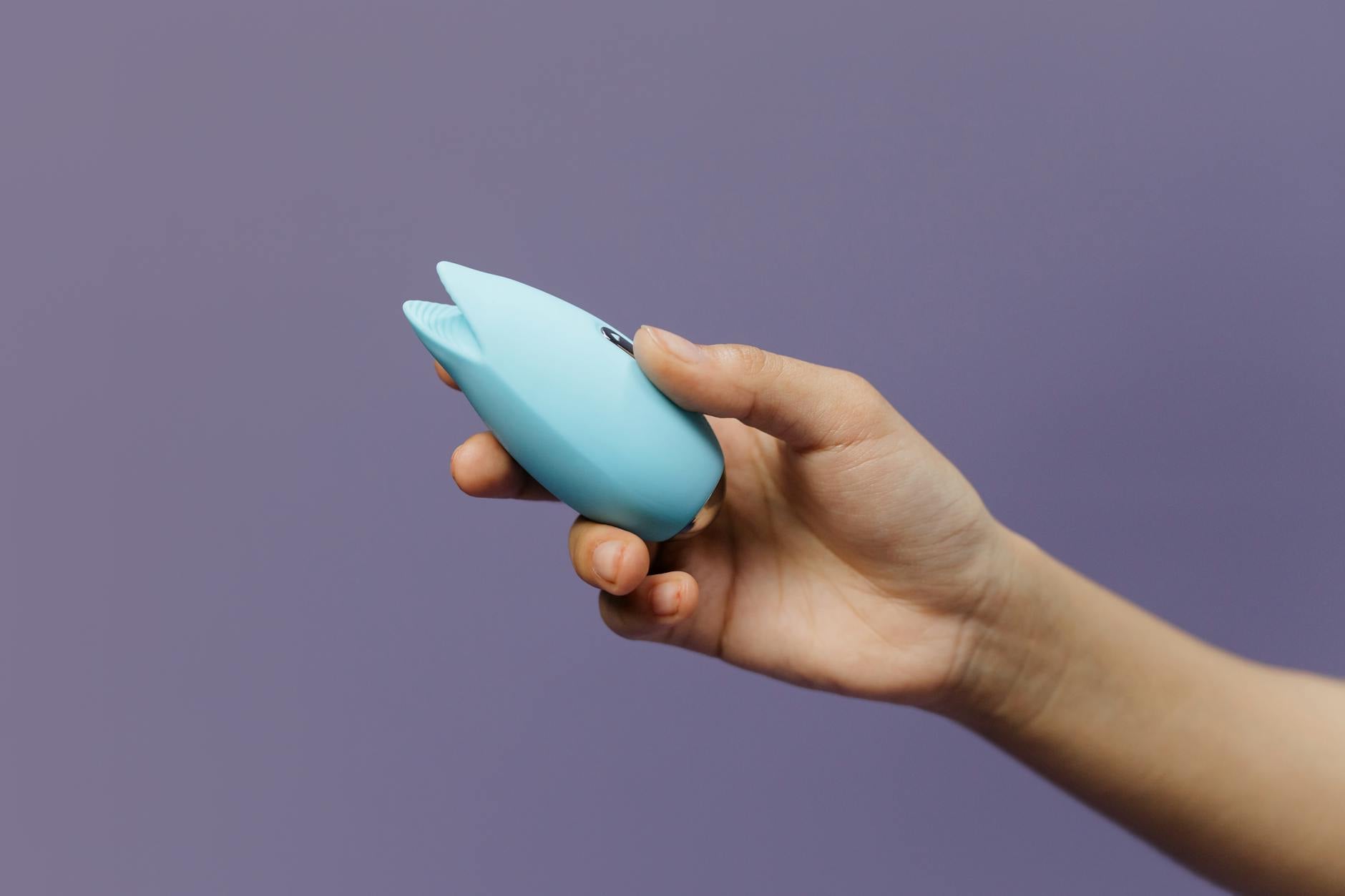
Lemon Sexual Toys, particularly options like the Lemon clitoral vibrator, work here because they reframe the conversation. Instead of "I need you to want sex more," it becomes "I want to feel good, and here's a way I can do that without putting pressure on you."
For the higher-desire partner, this is liberating. You can experience pleasure on your own timeline without waiting for your partner's desire to catch up. You're not managing their guilt or their obligation. You're just taking care of yourself.
For the lower-desire partner, this is also liberating, though in a different way. Your desire isn't something to fix. You don't have to perform or pretend. Your partner has found a way to feel satisfied that doesn't depend on you changing yourself. That actually tends to reduce the pressure enough that desire starts to naturally return.
The specific conversation to have
None of this works without talking about it. And this is where most couples get stuck because the conversation feels vulnerable and loaded. Here's the frame that actually works in my experience.
Start by naming the pattern without judgment: "I've noticed we want sex at different frequencies, and I think that's become this unspoken tension between us." That's it. No accusations, no solutions yet, just naming the thing.
Then separate the two conversations: "I want to figure out how we both feel satisfied without either of us feeling obligated or guilty." This is crucial. You're explicitly saying that you're not trying to change their desire, just working around it.
Then the practical piece: "I'm thinking about exploring solo pleasure when I'm wanting sex and you're not feeling it. That way I get what I need, and you don't have to perform." If you're the higher-desire partner, offer this as a gift, not a compromise. Say it clearly: "This is for me. It's not rejection of you. It's me taking care of myself so I can show up better in the rest of our life together."
If you're the lower-desire partner hearing this, the natural response is to feel relieved. Say that out loud. "That actually takes so much pressure off me. Thank you." That gratitude matters.
Where Lemon vibrators fit into partnered sex
Here's what surprised a lot of my clients. Once they separated solo pleasure from partnered sex, partnered sex actually became better. Because now it wasn't about checking boxes or managing mismatched need. It was something you both actually wanted to do.
Some couples find that adding a Lemon clitoral vibrator into partnered sex itself makes the experience work better for both of them. The higher-desire partner gets more intense sensation. The lower-desire partner doesn't have to work as hard to reach orgasm, which means shorter sessions feel more satisfying. Everybody wins.
The key is that it's optional, not required. You're not using toys to force more sex. You're using them to make the sex you do have more pleasurable for everyone involved. That's a completely different energy.
Addressing the real blocks
Most of the time, when I work with couples on desire mismatch, the actual issue isn't sexual. It's relational. One partner feels emotionally disconnected, so sex feels like another obligation rather than an extension of closeness. Another partner is exhausted, stressed, or dealing with grief. Someone's on medication that kills their libido. Someone else is deeply uncomfortable in their own body.
The vibrator doesn't solve any of those things. But it does buy you space to solve them. Once you're not fighting about frequency, you can actually address what's underneath the frequency mismatch.
If your lower desire is driven by emotion, you might benefit from couples therapy or deeper conversations about emotional intimacy. If it's driven by stress or medication, that's a conversation with a doctor. If it's physical discomfort, that might mean exploring what helps when sensation feels different. The point is, the toy creates the conditions for you to address the real issue.
What happens when you actually try this
Most couples report a shift within a few weeks. The pressure drops. Conversations become easier. The higher-desire partner feels less guilty and more satisfied. The lower-desire partner feels less resentful and more relaxed. And often, desire becomes less of a mismatch because it was never really about desire. It was about feeling obligated, guilty, rejected, or pressured. Remove those feelings, and desire naturally finds a more balanced place.
You don't end up with perfectly matched sex drives. That's not the goal. The goal is to stop making your different desires into a problem that needs fixing. Make them into just one of the ways you're different from each other. Like one of you likes coffee and one doesn't. Not worth fighting over. Just part of who you are.
Frequently asked questions
Can using a vibrator alone actually improve a relationship with mismatched desire?
The vibrator itself isn't magic. But it does remove one major source of conflict: the pressure for the lower-desire partner to have sex more often. Once that pressure is gone, couples often find it easier to reconnect emotionally and have more satisfying sex when they do have it together. The toy works because it changes the dynamic, not because it's inherently more pleasurable.
What if my partner feels threatened by me using a vibrator?
This usually signals that the real issue is insecurity, not the toy. Have the conversation directly: "Me using this isn't about you not being enough. It's about me taking care of my own pleasure so I'm not resenting you for not wanting sex as often." If they can't move past the insecurity, that's worth exploring with a couples therapist. The vibrator just brought a deeper issue to the surface.
Is it okay to use a toy during partnered sex if our drives don't match?
Absolutely. In fact, it often helps. The higher-desire partner can get more intense sensation without the lower-desire partner feeling like they have to perform longer or harder. It's a way of making the experience work better for both of you. Just talk about it first and make sure you're both genuinely on board.
How often should the higher-desire partner use a vibrator solo if drives are mismatched?
There's no rule. Listen to your body. Some people use one a few times a week. Others use one occasionally. The goal isn't to reach some magical frequency. It's to take care of your own pleasure without creating resentment in the relationship. Whatever frequency feels good and doesn't make your partner feel neglected is probably the right amount.
Will using a vibrator solo make me want my partner less?
The opposite usually happens. When you're taking care of your own pleasure instead of building resentment about unmet need, you actually feel more connected to your partner. It's the unmet need that kills desire for someone else. The vibrator removes that dynamic.
What if we're both the high-desire partner but we have different preferences?
Then you've got a different problem to solve. If frequency is matched but pleasure styles are different, Lemon vibrators can help equalize sensation for both of you. The person who wants more intensity can use it, and the person who prefers softer stimulation can opt out. That way you're both getting closer to what you actually want.
The real work isn't about toys
Mismatched desire breaks couples not because sex happens at different frequencies, but because that mismatch gets wrapped up in shame, obligation, and silence. The vibrator helps by creating a practical solution that removes pressure. But the real work is the conversation. The permission you give each other to want different things. The recognition that your partner's lower desire isn't a referendum on your attractiveness, and your higher desire isn't a character flaw.
Lemon vibrators help you have a better sex life. But the thing that actually saves a relationship with mismatched drives is the willingness to talk about it honestly and give each other grace. The toy is just a tool that makes that grace easier to practice. Start with the conversation. The rest will follow.