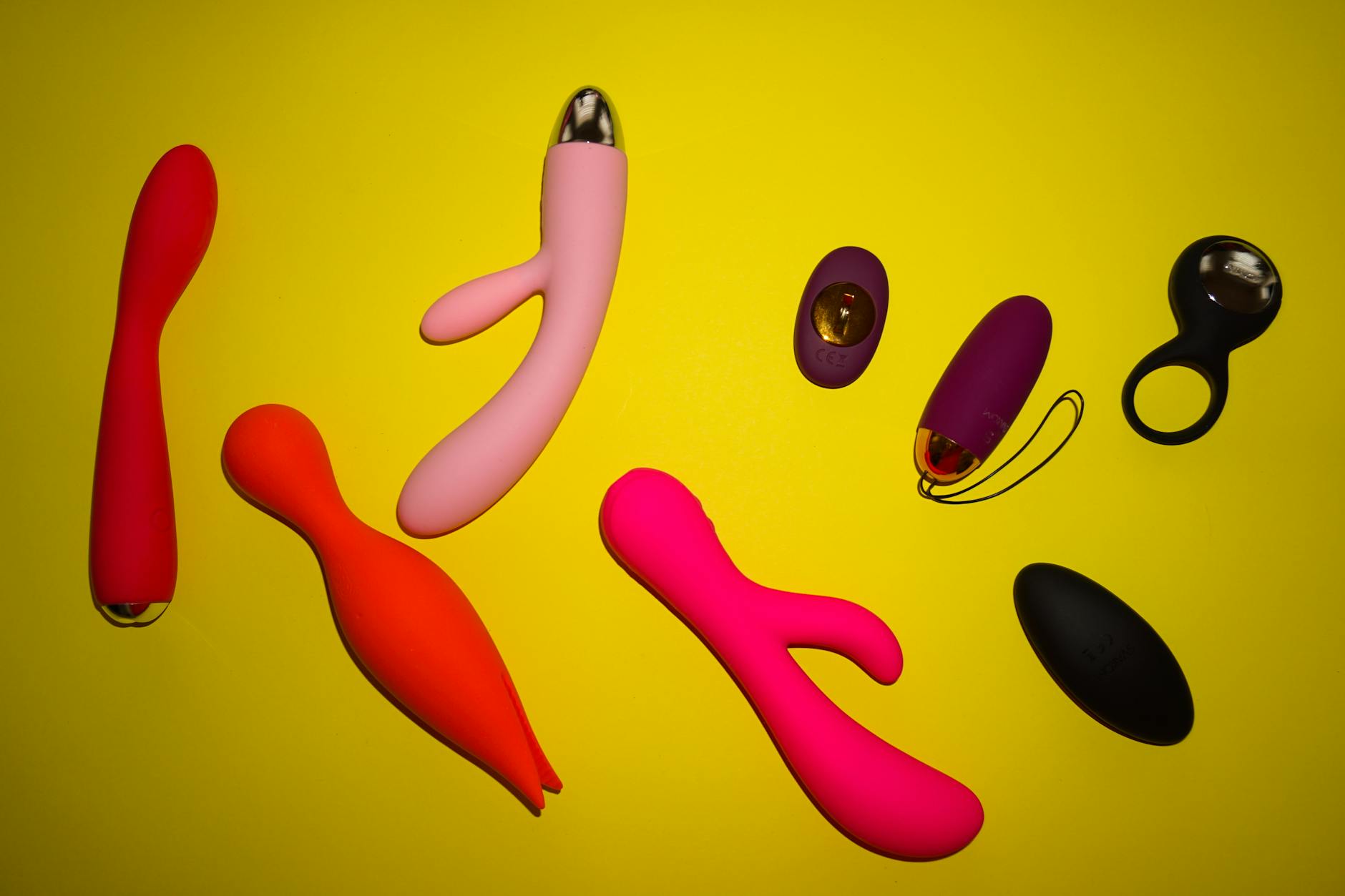
Here's the thing about arousal timelines
You used to get turned on in five minutes. Now it takes twenty. Or thirty. Or maybe you're in that weird middle ground where arousal starts but fizzles before sensation actually builds. Most people treat this like a problem to solve quickly. It's not. It's information about how your nervous system is operating right now, and that information is actually useful.
The good news: a Lemon clitoral vibrator is one of the best tools for working with a slower arousal pace. But only if you stop trying to rush it.
Why arousal has slowed down (and it's not your fault)
Slow arousal doesn't have one cause, and that's why generic advice fails. For some people, it's hormonal. Dropping estrogen, thyroid shifts, or medication side effects all change how fast blood flows to the clitoris and how quickly nerve signals fire. For others, it's psychological. Stress, anxiety, relationship friction, or just being distracted by laundry keeps the brain from signaling the body that it's safe to respond.
Most of the time, it's both at once.
The nervous system has two modes: sympathetic (fight-or-flight) and parasympathetic (rest-and-digest). Arousal lives in the parasympathetic zone. When you're stressed, your nervous system camps in sympathetic mode, and arousal has to queue behind survival. Your body isn't refusing pleasure. It's protecting itself.
The arousal curve is not optional
Here's what I tell clients: arousal is not a switch. It's a curve. And most of us were taught to expect the curve to be steep and quick. But slower curves aren't worse curves. They're often richer, because more of your nervous system gets involved.
With a Lemon vibrator, the temptation is to start at high intensity immediately. Don't. Instead, think about it as an extended warm-up tool, not a finish-line tool.
Start with your vibrator on the lowest setting. Pattern 1 or 2. Use it for five to ten minutes before you expect to feel much of anything. This sounds boring. It's not. What's happening underneath is that your tissues are receiving consistent, non-threatening stimulation. Your nervous system is slowly getting the signal: this is safe, we can relax. Blood flow increases gradually. Nerve endings wake up. After ten minutes, sensation deepens.
Build in a buffer between arousal and action
One of the biggest mistakes people make when arousal slows down is compressing the timeline. They think: okay, I need to get turned on faster, so I should just use the vibrator more intensely. That backfires. Intensity without arousal foundation actually suppresses sensation.
Instead, give yourself time between starting and expecting results. Here's what I recommend:
The 15-minute baseline. Budget 15 minutes of solo time with your vibrator on low-to-medium settings before you decide whether pleasure is available that day. Not looking at your phone. Not half-focused. Actually present. Most people find that by minute 10, sensation shifts noticeably.
Add a sensory opener first. Before you touch yourself, do something that activates parasympathetic mode. Take a warm shower. Light candles. Put on music that makes you feel something. Read something that interests you sexually. This isn't foreplay. It's nervous system priming. It tells your body that this time is different from the rest of the day.
Lubrication matters more than it used to. When arousal is slower, natural lubrication follows slower too. Water-based lube bridges that gap. It also makes the sensation from your Lemon clitoral vibrator more even and less jarring when you're not fully aroused yet.
What to do if arousal starts but stalls
Sometimes the tricky part isn't starting. It's sustaining. Arousal builds for ten minutes, then flattens. Your brain checks in with something random. The moment breaks.
When this happens, resist the urge to push harder with your vibrator. That usually makes it worse because you're adding more stimulation to an already-fragile moment. Instead, drop the intensity back to pattern 1, slow your breathing, and get still. Let your nervous system catch up. Sometimes arousal needs 30 seconds of nothing to reset and deepen.
If stalling happens repeatedly, it often means your nervous system is still in partial sympathetic mode. The buffer techniques above help. So does accepting that some days, deep arousal won't arrive. And that's okay. You can have pleasure without intense arousal. You can use your vibrator for sensation and release without the full buildup. Both are valid.
The role of expectation in arousal speed
This is the part nobody talks about, but it's crucial. When arousal gets slower, you often develop this low-level anxiety about whether it will happen at all. That anxiety is itself sympathetic activation, which slows arousal further. It's a loop.
One way to break the loop is to completely remove the goal. Instead of "I'm going to get turned on and have an orgasm," the goal becomes "I'm going to feel what happens when I spend 20 minutes with my Lemon vibrator without expectations." That shift alone changes your nervous system response.
Some days, that 20 minutes will lead to intense orgasm. Some days it'll lead to a gentle release. Some days it'll just feel nice without release. All three are worth your time. When you remove the outcome pressure, arousal often speeds up paradoxically, because your nervous system finally feels safe.
Partner sex and slower arousal
If you have a partner and you're using your Lemon vibrator with them, slower arousal becomes a conversation. Some partners interpret longer warm-up time as rejection or low desire. It's not. It's just logistics. <a href="/blog/how-to-use-lemon-vibrators-when-your-partner-wants-to-join-but-feels-left-out">When your partner wants to join but feels left out</a>, the solution is usually clarity: "I need more time to build arousal now. That's not about you. It's about how my nervous system is operating." Then let them be present during that time. They can kiss you, touch you, or just be in the room. The Lemon vibrator does the heavy lifting, but the presence matters.
Some couples find that the partner uses a vibrator on themselves while you warm up. Others find that having the partner do something unrelated (read, listen to a podcast) helps, because it removes the pressure of being watched or waiting. Figure out what makes your nervous system feel safest.
When slow arousal signals something else
Slow arousal is normal. Sudden complete loss of arousal is worth checking in on. If arousal has suddenly vanished where it used to exist, run through this quickly: Are you on a new medication? Has stress spiked significantly? Is there tension in your primary relationship that hasn't been addressed? Are you dealing with untreated depression or anxiety?
All of those kill arousal faster than anything else. Your Lemon vibrator is a great tool for many things, but it's not a substitute for therapy, medical consultation, or relationship repair if something deeper is wrong.
That said, plenty of people find that using their vibrator consistently, even during low-arousal periods, actually improves arousal over time. You're keeping neural pathways active. You're staying in touch with sensation. You're sending a message to your nervous system that pleasure is still available. All of that matters.
The practical setup for extended arousal building
Let me give you the exact setup I recommend:
Choose a time when you have genuine privacy and at least 30 minutes. Not "I have time if I hurry." Actually available time. Set your phone to do-not-disturb. Charge your vibrator the night before so battery isn't a variable. Have water nearby. Have your lube within arm's reach.
Start with your Lemon vibrator on pattern 1. Spend five minutes just noticing what sensation feels like at that level. Not trying to build anything. Just feeling. Then move to pattern 2 for five minutes. Then, if it feels right, pattern 3. You're mapping your own arousal curve in real time.
If you find a pattern that feels good, stay there. Don't automatically increase just because more exists. Sometimes the sweet spot is medium, not maximum.
FAQ: Arousal and Lemon vibrators
How long should I wait before trying a higher intensity setting?
Wait until you're actually feeling sensation. That varies wildly. For some people, it's five minutes. For others, it's 15. You'll know it when you feel it because the vibration will feel like it's doing something to your body, not just vibrating against it. The lower settings might feel distant at first. That's normal. Patience here pays off because once arousal is present, higher intensities feel infinitely better.
Should I use my Lemon vibrator every day if arousal is slow?
Consistency helps more than frequency. Three times a week for 20 minutes is better than daily five-minute attempts. Consistency sends a signal to your nervous system that this activity is a normal part of your life, which paradoxically relaxes your nervous system about it. Some people find that regular use actually speeds up their arousal response over a few weeks. Others find their optimal pace and stick with it. Both are fine.
Is lube necessary if I'm using a clitoral vibrator?
For slower arousal, yes, strongly consider it. When your body is generating less natural lubrication, the sensation from your Lemon vibrator can feel too intense or even uncomfortable against dry tissue. Lube smooths that out and makes the sensation more pleasant during the warm-up phase. Use water-based lube so it doesn't damage your silicone vibrator.
Can anxiety about slow arousal actually make it slower?
Absolutely. That's not just psychology. That's your nervous system. Anxiety is sympathetic activation, which suppresses parasympathetic activation, which is where arousal lives. The moment you start worrying about whether arousal will happen, you've moved your nervous system into a state that prevents it. This is why expectation-free time with your vibrator works so well. No pressure, no anxiety, no fight with your own body.
What if my partner gets impatient during extended warm-up?
That's a conversation to have before sex, not during. Your slower arousal pace is not a flaw. It's a fact about how your body works right now. If your partner can't make space for it, that's information about your relationship. <a href="/blog/how-to-use-lemon-vibrators-when-physical-intimacy-pauses-during-relationship-conflict">When physical intimacy pauses during relationship conflict</a>, it's often because one person's needs and another person's expectations aren't aligned. This is the same conversation, just earlier.
Is there a point where slow arousal means I should see a doctor?
If arousal has completely disappeared and hasn't returned in several weeks, yes. Check in with your doctor. But slow arousal that's still happening, just on a longer timeline? That's not a medical issue. That's just how your nervous system is operating right now. It can change. Tools like your Lemon vibrator help that change happen. But it's not broken.
The bigger picture
Slow arousal is one of those things that feels broken because you're comparing it to a previous version of yourself. But every timeline is valid. Your body isn't failing. It's communicating. The Lemon clitoral vibrator is a tool for listening to that communication and working with it, not against it. That's where real pleasure lives.
If you're struggling with arousal across the board and want to talk through what might help, <a href="/contact">reach out</a>. I'm here for the questions that don't fit neatly into advice.