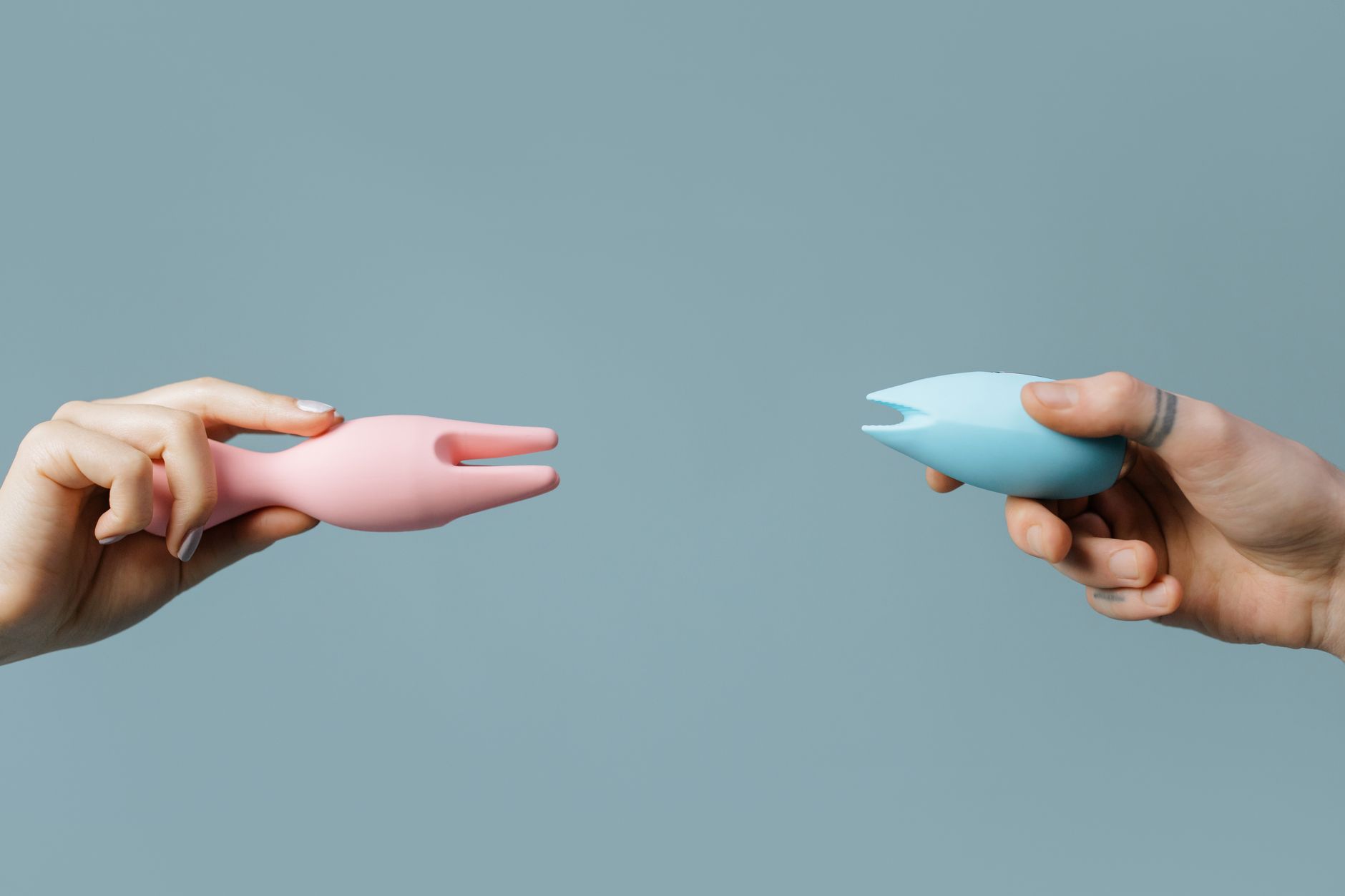
Here's what happens to your body after a dry spell
Let's be real. If it's been months or years since you've had sex, masturbated regularly, or even thought much about pleasure, your body doesn't suddenly stop working. But it does shift into a different state. The nerve pathways that fire during arousal get quieter. Your tissues lose some of their baseline engorgement. Your brain, weirdly, has to re-learn the signal pattern.
This isn't a malfunction. It's just what happens when you take a break. And the good news is that it reverses faster than you'd think.
Why time away from pleasure feels different physically
Three biological things occur when you're not regularly stimulating your clitoris or genitals:
First, blood flow to the area decreases over time. Your vulva and clitoris are packed with sensitive nerve endings, and they work best when they're well-supplied with oxygen and blood. Without regular arousal, that baseline circulation drops. You're not broken. You're just dormant.
Second, if you've been under stress (career changes, life chaos, relationship shifts), cortisol stays elevated. High cortisol dampens desire and makes your nervous system more guarded. Even if you want to feel pleasure, your body might be holding back.
Third, the actual sensation of touch becomes duller because those neural pathways haven't been exercised. Imagine not using a muscle for a year. You can still use it, but it takes time to rebuild sensitivity and strength. Your pleasure system works the same way.
The body wants to come back online. You just need the right tool to wake it up.
Why lemon vibrators work so well for restarting sensation
Lemon clitoral vibrators are different from traditional vibrators in one crucial way: they use suction and gentle pulsing instead of direct buzzing friction. This matters hugely when your nerve endings have been quiet.
When you've been away from pleasure for a while, direct vibration can feel overstimulating or even uncomfortable at first. Your clitoris has been resting. Throwing intense vibration at it is like sprint-training someone who hasn't run in five years. You need a gentler approach that still wakes up the nerves.
Suction works because it stimulates the entire clitoral area (remember, your clitoris is much larger than just the visible external part). The gentle suction and pulse pattern activates nerves in layers rather than all at once. You build sensation gradually.
This is why people who are restarting say lemon vibrators feel more natural than traditional vibrators. Your body recognizes the sensation faster and responds more quickly.
The first week: starting with patterns one through three
When you pick up a lemon clitoral vibrator for the first time after years away, resist the urge to go straight to the higher settings. Your nervous system needs time to remember what arousal feels like.
Start with pattern one. Spend 10-15 minutes just exploring. You're not trying to climax. You're reintroducing sensation. Some people describe it as almost meditative at first, before pleasure kicks in. That's exactly what should happen.
On day two or three, try pattern two. You'll likely notice that the sensation feels less alien. Your body is remembering. By day five or six, pattern three might actually start to feel good in a real way, not just interesting.
You're not being cautious because something's wrong with you. You're pacing the reactivation of your pleasure system so your brain and body can sync up. Rushing this loses you the very benefit you're after.
Building comfort and sensation over two to four weeks
After that first week, most people move into a discovery phase. You'll start to feel where you like pressure, whether you prefer the pulse to stay in one spot or move slightly, and how long your arousal builds.
This is also when partner dynamics shift, if that's in the picture. If you've restarted pleasure solo first using a lemon vibrator, you've already done the hard work of remembering what your own body wants. You're not asking a partner to figure out your pleasure from scratch. You're saying, "I know what I like now. Let's build from there."
The timeline varies wildly. Some people feel a major shift in two weeks. Others take six to eight weeks to really feel like their pleasure system is fully online again. Both are normal. Your nervous system isn't on anyone else's schedule.
One thing I notice across clients: the more consistently you use a lemon vibrator during this period, the faster sensation returns. This is partly physiological (you're maintaining blood flow and nerve firing) and partly psychological (your brain isn't afraid of the sensation anymore). If you use it sporadically, progress slows. If you use it a few times a week, the shift is noticeable.
The mental piece: why your brain needs time too
After time away from sex or pleasure, sometimes the block isn't physical. It's mental. You might feel rusty, awkward, or disconnected from your own body. That's not unusual, and it doesn't mean your body is broken.
Using a lemon vibrator solo gives you the space to re-familiarize yourself with pleasure without performance pressure. If you're with a partner, this matters even more. You get to say, "I need a little time to figure out what I want." That's not rejection. That's actually exactly what makes the experience better for both of you eventually.
Some of my clients use lemon vibrators as part of a wider reconnection ritual. A bath, soft lighting, a specific time where they're not rushing. The ritual itself helps the nervous system settle, which then makes physical sensation more accessible. Your pleasure isn't just about the vibrator. It's about permission and space.
When to move up in intensity (and when not to)
Lemon vibrators have multiple patterns and intensities for a reason. You don't need to use all of them. Ever.
If patterns one through three feel good and you're reaching climax, that's your answer. You don't need to chase the highest setting. Higher isn't better. More responsive is better, and that means using the tool that works for your body right now.
That said, if after four weeks you want to explore a higher pattern just to see what it feels like, that's fine. You're not locked into gentleness forever. But don't feel obligated. I've worked with clients who found their favorite pattern in week two and used it happily for years. The goal is your pleasure, not proving you can handle intensity.
Bringing a partner into the restart
If you're restarting pleasure and also dating or partnered, the conversation matters as much as the vibrator.
You might say something like: "I've been away from sex for a while and I'm taking some time to remember what feels good to me. I'm using a vibrator to help with that. I'm not trying to exclude you. I'm actually trying to show up better when we're together because I'll know what I want."
That's radically different from shame or avoidance. It's ownership. And partners respond well to ownership.
When you do bring lemon vibrators into partnered sex, they work beautifully for external stimulation alongside penetration or as foreplay. You can use the vibrator on yourself while your partner is present. You can ask them to hold it. The point is you're showing them what works, which takes the guessing out of the equation for both of you.
A note on lube, even though you think you might not need it
After time away, you might assume you won't need lubricant because the vibrator isn't penetrative. But lube changes everything. It reduces friction between the toy and your skin, makes sensation feel smoother and more diffuse, and honestly makes the whole experience feel less clinical.
Use a water-based lube with your lemon vibrators. It's compatible with the silicone, feels good, and means you're not working against any resistance. Your body will thank you.
What happens after four to eight weeks
If you stick with this, something shifts. Your arousal builds faster. Sensation feels richer and less novelty-based. You start to recognize your own pleasure preferences instead of just discovering them week to week.
Many people find that after this restart phase, they can use lemon vibrators more flexibly. Higher patterns feel good instead of overwhelming. Sensation generalizes (meaning you feel pleasure more easily in your whole body, not just your clitoris). And the psychological confidence that comes from reconnecting with your own pleasure radiates into other areas.
You're not just restarting sex. You're rebuilding trust in your own body. That's the real shift.
People Also Ask
How long does it usually take for sensation to return after a long break from sex?
Most people notice a shift within two to four weeks of consistent stimulation. Some feel it faster, others take six to eight weeks. It depends on how long you were away, your overall stress levels, and how often you're using the vibrator. The key is consistency, not intensity. Two or three sessions a week will show you progress faster than sporadic use.
Can lemon vibrators actually help restore sensitivity that's faded over time?
Yes. Suction-based stimulation like lemon clitoral vibrators activates nerve endings in a more layered way than direct vibration. This retrains your nervous system to recognize and respond to arousal. You're not replacing sensation you've lost. You're activating sensation that's been dormant. The difference matters psychologically and physically.
Should I use a lemon vibrator alone first before using one with a partner?
It depends on your comfort level, but I generally recommend solo exploration first. It gives you the chance to figure out what patterns and intensities feel good without any performance pressure. Then when you bring it into partnered sex, you're not learning simultaneously. You're already confident. That confidence translates to better pleasure for everyone.
What if I don't reach orgasm using a lemon vibrator at first?
That's normal and doesn't mean anything is wrong. After time away from pleasure, your body might need several sessions before orgasm returns. Focus on sensation and enjoyment first. Orgasm will follow. And if it takes longer than you expect, that's not failure. That's just your nervous system being honest about where it is.
Can I use lemon vibrators if I've had medical changes like taking antidepressants?
Yes, and they're actually particularly helpful for this. <a href="/blog/how-to-use-lemon-vibrators-for-better-sensation-after-long-term-antidepressant-use">Antidepressants can affect sexual response</a>, and lemon vibrators work well because they provide consistent, non-intimidating stimulation that helps you navigate that shift. You might need to use higher patterns or longer warm-up time, but the suction approach is gentler than traditional vibrators for this specific situation.
Do I need to use lemon vibrators regularly to keep sensation from fading again?
Not obsessively, but consistency helps. If you use a lemon vibrator regularly, your body maintains the sensation and nerve firing. If you stop for months again, you'll feel the shift. That doesn't mean you've failed. It means your body responds to what you give it attention to. Monthly use keeps things generally online. Weekly use keeps you sharp. It's your call.
The bottom line
Your thirties are not too late to restart pleasure. Your body hasn't forgotten how to feel. It's been waiting. Lemon vibrators are an excellent tool for that restart because they meet your body where it is instead of demanding it jump straight to intensity.
If you're restarting after time away, give yourself four to eight weeks of consistent exploration. Use patterns one through three. Pay attention to what feels good. And remember that reactivating pleasure is as much about rebuilding trust in your own body as it is about the vibrator itself.
Your pleasure matters. Your body deserves that attention. And you deserve to feel good again.
If you'd like to talk through your specific situation or have questions about navigating pleasure during relationship transitions, <a href="/contact">reach out to us</a>.