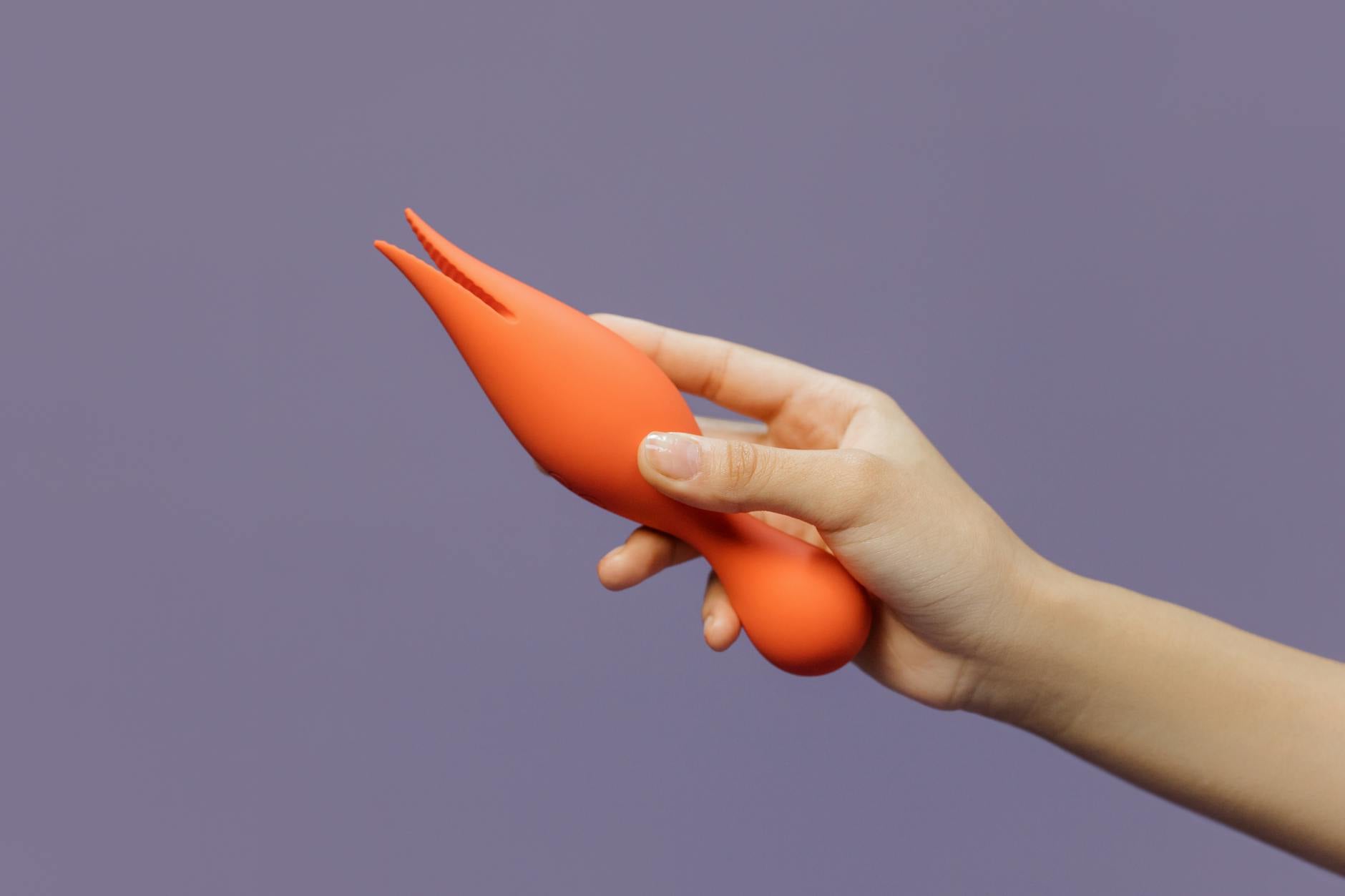
How to Use Lemon Vibrators for Better Sensation When Your Partner Has Erectile Dysfunction
ED doesn't end your sex life. It redirects it. Here's how to use clitoral vibrators to reclaim pleasure and rebuild the physical connection you've both been missing.
Your partner can't maintain an erection consistently. Maybe it started suddenly, maybe it's been creeping up for months. Either way, the two of you are sitting with a problem that feels like it's about sex, but it's really about two separate things: his body's mechanics, and your mutual pleasure. Those are different conversations, and treating them as the same thing is where most couples get stuck.
Here's what I know from years of working with couples navigating erectile dysfunction: the people who move through it fastest aren't the ones who white-knuckle their way back to penetration. They're the ones who temporarily accept that penetration might not be the path forward right now, and then rebuild sensation in other directions. Clitoral vibrators like those from Lemon Sexual Toys become less of a workaround and more of a genuine upgrade to what you were doing before.
When ED enters a relationship, one of two things usually happens. Either the partner without ED stops receiving pleasure because penetration becomes the only "real" goal, or they pursue it solo to avoid the shame conversation entirely. Both leave you more disconnected, not less.
Using a clitoral vibrator together reframes the entire dynamic. It's not a consolation prize. It's not him "failing" and you "settling." It's the two of you choosing a form of touch that actually works for your bodies right now. That's not resignation. That's honest.
ED typically means one of three things: he can't get hard, he can't stay hard, or he loses hardness too quickly after penetration. Each creates a different friction point (literally and figuratively).
When penetration isn't on the table or keeps getting interrupted, your nervous system doesn't have time to fully build toward orgasm. You're waiting, anticipating, managing his anxiety about performance. That cognitive load kills sensation faster than anything else.
A Lemon vibrator lets you stay in your own arousal while he's engaged in a way that works for his body. That separation is actually intimacy. You're not waiting for him to be functional. You're both functional at the same time.
Start with foreplay that doesn't center on his erection. Hands, mouths, bodies together. The goal is mutual arousal, not performance. Spend 15 to 25 minutes here. No timer. No checking in. Just presence.
Then bring in the vibrator once you're both aroused. Not as a replacement. As an addition. He can be inside you manually, or beside you, or using his hands on you in other ways. The vibrator goes on your clitoris. You're the one controlling the sensation, the speed, the pattern.
This changes the pressure entirely. He's not trying to be the sole source of your pleasure. His penis isn't the metric. His participation is what matters, and that can look like touching you, watching you, talking to you, managing the vibrator's settings with you. All of that is him being present.
Lemon's clitoral vibrators use a suction and pulsing mechanism, which is different from traditional rumbly vibrators. That matters when your partner has ED because the sensation is concentrated and intense without requiring the kind of deep penetration that might highlight his difficulty staying hard.
The Lemon vibrator is also something you can control entirely. You set the pattern. You set the speed. That agency is crucial when you've been in a relationship where sex has felt unpredictable or performance-focused.
If you've been using traditional vibrators before, the sensation might feel oddly localized at first. That's normal. Let yourself adjust over 2 to 3 sessions before deciding if it's working.
Here's the part that actually determines whether this works: you both have to agree that this isn't permanent failure. It's a pivot.
Men with ED often carry a lot of shame about it. The narrative they've internalized is "my job is to give you pleasure, and I can't do my job." That's a crushing frame. If you're using a vibrator, he might interpret it as confirmation that he's failing.
So you need to say something like: "I want us both to feel good. My orgasm matters. Your pleasure matters. Neither of those things requires your penis to work a certain way. Let's find what actually works for our bodies right now." Not once. Repeatedly, until he believes you.
If there's shame in the room, the vibrator won't fix it. It'll just become another thing tainted by the anxiety.
Don't surprise him with a vibrator in the middle of sex. Have a conversation outside the bedroom, when you're both clothed and calm.
Say something like: "I've been thinking about what would feel good for both of us. I want to try using a vibrator together. Not instead of you. With you. I think it could actually help us both relax and enjoy this more."
If he's resistant, ask what he's afraid of. Is it that it will work "too well" and make his penis feel unnecessary? Is it that it feels emasculating? Is it that he doesn't understand how to use it?
Each of those is answerable. "No, the vibrator isn't a replacement. You're still touching me, still inside me in other ways, still present." "Your worth isn't your erection." "I'll show you the settings." "We can start with your hands on the vibrator."
If your partner is on medication for ED, or if he's seeing a doctor, great. That's parallel to this, not instead of it. Medical solutions take time. In the meantime, you don't have to stop having good sex. You just have to expand what "good sex" means.
Many couples find that when they stop making his erection the only goal, the anxiety decreases, and erections often follow. Not always. But often. The pressure is the poison, and removing the pressure sometimes removes the problem.
Once you've introduced the vibrator and he's on board, here's the rhythm that works for most couples:
You get settled. He touches you and you touch him. Once you're both in the moment, the vibrator comes in. You use it on your clitoris while his hands, mouth, or body are involved in whatever way feels good. He can be focused entirely on you. He can be pursuing his own pleasure. Both are fine.
If he loses an erection midway, it doesn't matter. The vibrator keeps the pleasure going. You don't have to stop, reassess, or perform recovery. You just keep going.
That removal of consequence is profound. For both of you.
If ED is new or sudden, your partner should see a doctor. It's often a sign of something medical that's very fixable. Cardiovascular health, hormones, medications he's on. A GP can rule things out quickly.
If the shame and anxiety around it are getting in the way of you two connecting even outside the bedroom, a couples therapist or sex therapist is worth the investment. This isn't a vibrator problem. It's a communication problem wearing an ED costume.
Using Lemon vibrators together can be part of the solution. It's not the whole solution. But it's often the part that reminds couples that pleasure is still possible, right now, without waiting for "normal" to come back.
ED might be temporary. It might be chronic. Either way, learning to have satisfying sex that doesn't center on penetration is genuinely useful. You might find that clitoral vibrators actually feel better than what you were doing before. That happens more than people expect.
Your body deserves pleasure. His body deserves to be touched without performing. A clitoral vibrator is just a tool that makes both of those things possible at the same time. It's not romantic or poetic. It's practical and effective. And right now, that's exactly what you need.
No. A vibrator won't cause ED or make it permanent. What sometimes happens is that if a man was already anxious about his performance, introducing a vibrator can initially feel like more proof that he's failing. That's a confidence issue, not a vibrator issue. It's why the conversation matters more than the toy. Once he understands that you're using it because you both deserve pleasure right now, most of that anxiety settles.
Not inherently. Clitoral vibrators work on a different part of your body than penetration does. They're stimulating different nerve endings. The two can coexist. What sometimes happens is that couples realize they prefer the vibrator, or they prefer using it together, and they integrate it into their regular sex life. That's not a downgrade. That's learning what works.
That's a shame narrative that needs unpacking outside the bedroom first. You might say something like: "Using a vibrator isn't about replacing you. It's about me getting to feel good while you're with me. Right now, I'm not getting what I need from penetration alone, and that's not your fault. But my pleasure still matters. Can we figure this out together?" If he still refuses, a sex therapist can help reframe it.
That depends on the cause. If it's psychological, reducing the pressure by using vibrators often helps within weeks or months. The anxiety drops, and erections often follow. If it's medical, it depends on the underlying issue and treatment. Using vibrators doesn't cure ED, but it removes the urgency and shame that often make it worse.
The Lemon clitoral vibrator is designed for concentrated, controllable stimulation, which works well when penetration isn't reliable. The suction and pulsing patterns let you find exactly what feels good without needing deep internal pressure. Any of Lemon Sexual Toys' clitoral vibrators will work. Pick one based on what appeals to you, not based on what you think will "fix" the ED. That's not what it's doing. It's just making room for pleasure that's otherwise on hold.
Yes, sometimes significantly. If ED is driven by performance anxiety, pressure, or habit, removing the focus from penetration often helps. It decreases the stakes and lets pleasure happen without the weight of expectation. If it's medical, that needs a doctor. But the psychological component is real, and restructuring how you touch each other can genuinely help.
Evelyn Granieri's clinical practice focuses on relationship dynamics during medical and sexual health transitions. Her framework for integrating intimacy tools during erectile dysfunction draws from Gottman Method principles and contemporary couples therapy research on performance anxiety and sexual satisfaction.