Let's start with the thing nobody mentions in the doctor's office
Antidepressants are genuinely life-changing medications. They stop panic attacks, lift depression, make it possible to get out of bed. What they don't tell you at the pharmacy, in the handout, or in most clinical conversations is that SSRIs and SNRIs flatten sexual sensation like nothing else can. Not because your body broke. Not because you're broken. Because that's how the medication works, chemically.
I've worked with hundreds of couples navigating this shift, and the pattern is always the same: shame, confusion, and a quiet assumption that this is the price you pay for mental health. It's not. It's a side effect that's manageable once you understand it.
How antidepressants change sensation
Serotoninergic medications affect arousal at multiple points in the chain. They delay or blunt the initial spark of desire. They slow down genital blood flow. They make orgasm harder to reach and, when it happens, less intense. For many people, the sensation during sex becomes almost background static. You're going through the motions, but the pleasure signal has turned down to a whisper.
This isn't psychological. It's not that you don't want sex or that your relationship is broken. Your nervous system is literally receiving a dampened signal. Your brain's pleasure centers are chemically quieter. That matters because it means solutions have to work with the chemistry, not against it.
The good news is that your clitoral nerve density hasn't changed. Your capacity for orgasm is still there. You've just got a signal-to-noise problem.
Why lemon clitoral vibrators work better for antidepressant users
Most traditional vibrators use broad, gentle stimulation. If your sensation is already dampened, that gentleness disappears entirely. You're basically trying to feel through a wall of cotton.
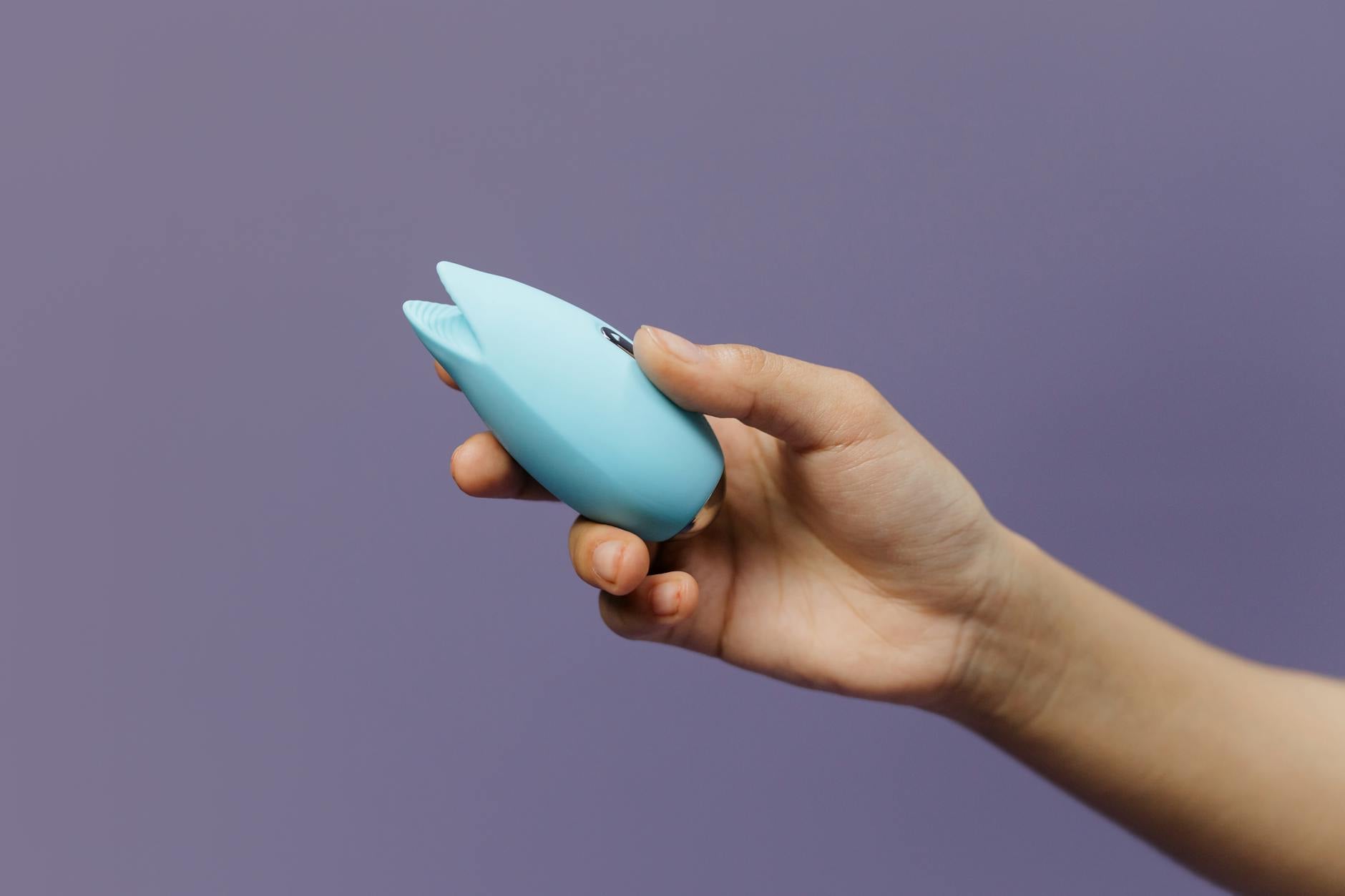
Lemon vibrators, particularly the Lem, use a different mechanism. The pulsing, rhythmic suction pattern creates a more intense, focused stimulation that cuts through the dampening effect better than conventional vibration alone. It's not about being aggressive. It's about signal clarity. When sensation is muted, you need a stronger, more targeted signal to feel pleasure at all.
I recommend lemon sexual toys to clients on antidepressants because they work with the chemistry rather than against it. The concentrated suction stimulation bypasses some of the dulling effect by creating a sensation that's harder for your nervous system to ignore.
The slow return of sensation
Here's what I want you to know before you start: rebuilding sensation after long-term antidepressant use is gradual. It doesn't happen overnight, and it's not linear. Some days will feel better than others, depending on your medication timing, stress level, and overall nervous system state.
Start with the lowest settings on your lemon vibrator. Pattern one or two, low intensity. Spend 20 to 30 minutes exploring without the pressure of orgasm. Your nervous system needs time to wake back up. That's not a failure. That's a nervous system learning to feel again.
Many clients report that after three to six weeks of consistent use, sensation begins to shift. Not because the medication changed, but because your brain's pleasure circuitry is getting regular stimulation and learning to respond again. It's like a muscle that's been inactive. It needs time.
What timing matters
If you take your antidepressant in the morning, your medication will be at peak levels during the afternoon and evening. That's not when sensation is usually best. If possible, talk to your doctor about timing. Some people find that spacing their dose or adjusting timing slightly helps with sexual response. I'm not recommending you change your medication. I'm saying this conversation with your prescriber is worth having.
Alternatively, use your lemon vibrator in the early morning, before your daily dose peaks. Some people find that the hour or two right after waking gives them marginally better sensation. It's not a game-changer, but it can help.
Communication with partners
If you're with someone, this is a moment to separate two conversations that often get tangled. One conversation is about your body and medication: "My antidepressants have changed how I experience pleasure. This isn't about you or about how I feel about you. It's a side effect I'm managing." The second conversation is about rebuilding intimacy together: "I want to explore what works now. I want us to figure this out as a team."
Many partners interpret dampened response as reduced interest. Naming the cause directly prevents that misread. And exploring sensation together, using lemon clitoral vibrators or other tools, can feel like reconnection rather than repair. It's a shared experience instead of something you're managing alone.
When to loop in your prescriber
If sensation hasn't budged after eight weeks of consistent use, talk to your doctor. There are medication adjustments worth considering: dose timing, dose reduction (if clinically appropriate), or switching to a different SSRI class that might have less sexual side effects. Bupropion, for example, is less likely to dull sensation than standard SSRIs. This isn't about stopping your medication. It's about finding the right medication at the right dose for your whole life, including your sexual health.
Some people benefit from adding a medication that counteracts sexual side effects. Others find that splitting doses helps. Your prescriber probably won't bring this up because they're trained to think of sexual function as secondary to mental health treatment. It's not. Your pleasure and your mental health both matter.
The patience part
Rebuilding sensation after years on antidepressants requires patience with yourself. You're not broken. Your medication isn't broken. There's just a mismatch between your nervous system's capacity to feel and the chemical environment it's in. Lemon vibrators work because they amplify the signal enough for your nervous system to register pleasure again. But the actual rewiring takes time.
Most clients report that after consistent use over two to three months, sensation stabilizes at a new normal. It may not be the same as pre-medication sensation, and that's okay. Different isn't worse. Many people find their post-antidepressant sexual response is actually more stable, less reactive, and in some ways more sustainable than before.
Practical setup for rebuilding
Start here. Find a quiet space where you won't be interrupted for at least 30 minutes. Use water-based lubricant generously. External sensation becomes even more important when internal sensation is dampened, so lube reduces friction and lets you focus on what you can feel. Use your lemon vibrator on the lowest pattern and intensity. Explore without a specific goal. Notice what patterns feel better than others. Some people find that a steady pulse works better than a varying pattern. Others prefer the opposite. Your nervous system will tell you.
Keep a simple note on your phone. After each session, note how the sensation felt relative to yesterday or last week. It helps you track subtle shifts that you might otherwise miss. These changes are small, but they compound.
The mental piece
Antidepressants can also muffle desire through mood channels, not just sensation channels. You're not depressed anymore, which is the goal. But you might feel emotionally neutral about things that used to excite you. This isn't your body. This is your brain in a different state. Pleasure rebuilding sometimes requires intentionality: scheduling time, removing other demands, deciding in advance that you want to explore sensation. That sounds unromantic, but it works. Your nervous system needs permission and space to wake up.
The bigger picture
Your mental health and your sexual health are not in conflict. They're linked. Good antidepressant management includes paying attention to sexual function as part of overall quality of life. If your current medication is working for depression but has flattened sensation, that's worth addressing. You're not choosing between mental health and pleasure. You're optimizing for both.
Lemon vibrators, combined with patience, timing awareness, and good communication with your prescriber, help a lot of people move through this transition. Your sensation can come back. It just needs the right signal, and time.
Common questions
Can I use my lemon vibrator if I'm still adjusting to my antidepressant?
Yes, but start low and be patient. Your nervous system is still settling. Use the lowest settings and don't have expectations about outcomes. You're gathering data about your body's baseline while on the medication. That's valuable information whether or not you feel much sensation yet.
How do I know if it's the medication or something else dampening my pleasure?
Start a simple timeline. When did you start the antidepressant? When did sensation change? If both happened within weeks, it's almost certainly the medication. Other factors could include stress, relationship changes, or other health shifts. But if sensation changed right around medication start and hasn't returned in months, medication is almost always the primary cause.
Is it okay to use a lemon vibrator more frequently to try to speed up sensation return?
More frequent isn't necessarily better. Your nervous system needs recovery time between sessions. I recommend three to five times a week, with at least one rest day between sessions. This keeps your nervous system engaged without pushing it into overstimulation or fatigue. Quality and consistency matter more than frequency.
Should I tell my partner about using a lemon clitoral vibrator if we're trying to rebuild sensation together?
It depends on your relationship and communication style. If you're trying to rebuild shared pleasure, exploring together is powerful. If you're using it for individual exploration first, that's also valid. There's no rule. I'd just recommend not framing it as a secret. Openness usually helps with the emotional part of the journey.
What if sensation returns but feels different than before my antidepressant?
It probably will feel different. That's not bad. Post-antidepressant sensation is often less reactive and more stable. Some people find it more sustainable during longer sessions. Expectation is everything here. Your body hasn't failed. It's just adapted to a new baseline. Meet it there.
Can I use my lemon vibrator if I'm changing antidepressants?
Yes. Actually, transition periods are great times to pay attention to sensation shifts. As your old medication leaves your system and a new one settles in, you might notice sensation changes. Keep exploring with your lemon vibrator throughout. This helps you understand what the new medication is doing and notice if it's working better for you overall.
Moving forward
Antidepressants are not a life sentence of flat pleasure. They're a tool that often needs adjustment once you're stable. Using lemon clitoral vibrators, being patient with your nervous system, and staying in conversation with your prescriber helps a lot. Your sensation can come back. Your pleasure matters. Both things are true.
If you want to explore this more deeply or if you're feeling stuck in rebuilding intimacy with a partner, I'm here. That's what I do. Reach out anytime.