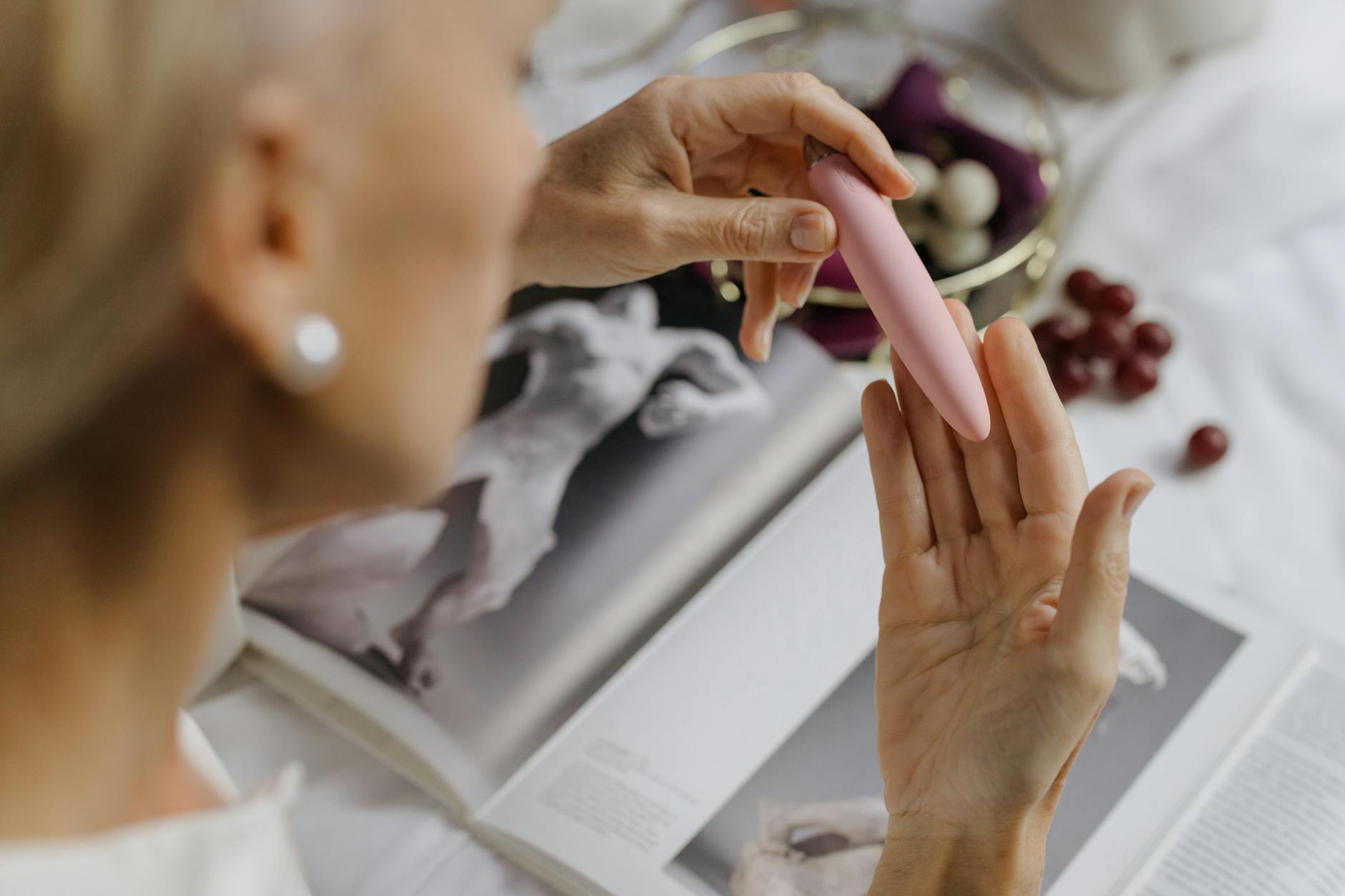
Let's talk about what hormones actually do to sensation
Hormonal changes are real. They affect blood flow, tissue thickness, nerve sensitivity, and how quickly your body wakes up to touch. But here's what nobody tells you clearly: sensation loss is not permanent, and the right tool makes a massive difference in how fast you get it back.
I've worked with hundreds of people navigating perimenopause, postpartum recovery, hormonal birth control shifts, and full menopause. The pattern is always the same. They come in thinking their body is broken. It's not. It's just recalibrating, and it needs different stimulus to meet it where it is now.
Why hormonal fluctuations change how you feel touch
Estrogen does more than regulate your cycle. It controls vaginal lubrication, clitoral sensitivity, blood vessel dilation, and how much sensation your nerve endings actually register. When estrogen drops (whether through menopause, certain birth control methods, or postpartum recovery), tissues become thinner and drier. Blood flow to the pelvic area decreases.
That's the physical part. The emotional part is equally important. Hormonal shifts often come with mood changes, fatigue, and a kind of emotional distance that makes it harder to access arousal in the first place.
When sensation fades, people typically reach for the same toy they've always used and turn up the intensity. That's backwards. Going harder when your tissues are more fragile and your nerves are less reactive does nothing but frustrate you.
Why Lemon Vibrators work better after hormonal shifts
Lemon sexual toys use air-suction technology instead of traditional vibration. This matters enormously when your body has changed.
Traditional vibrators rely on direct mechanical pressure against tissue. When clitoral tissue is thinner from hormonal changes, that direct pressure can feel uncomfortable, overstimulating, or actually painful. You end up chasing sensation that isn't there instead of letting the tool do its job.
Lemon clitoral vibrators work through gentle suction and micro-pulses. The suction draws blood to the area and stimulates nerve endings without requiring friction or intense direct pressure. This is gentler on fragile tissue while paradoxically creating more distinct sensation because it's not numbing the area through overstimulation.
Think of it like this: a traditional vibrator is a jackhammer. Lemon vibrators are precision tools. After hormonal changes, your body needs precision.
What happens in the first week of using lemon vibrators
Most people report noticing difference within the first few sessions. Not necessarily orgasm yet, but actual sensation returning. A tingling. Responsiveness. The feeling that their body is waking up again.
This happens because suction-based stimulation meets the clitoris where it is, not where it used to be. You're not fighting against reduced sensation. You're working with it.
The clitoris has about 8,000 nerve endings. Hormonal changes don't kill those nerves. They just change how much signal the body is able to amplify. Lemon vibrators bypass that amplification problem by creating a different kind of signal entirely, one that the post-hormonal body actually registers strongly.
How to actually use lemon sexual toys after hormonal changes
If you're coming back to pleasure after hormonal shifts, here's what actually works.
Start at the lowest setting. Not because you're weak or broken, but because your nervous system is hyperaware right now. It's hungry for signal. The entry-level intensity on Lemon vibrators is designed to wake sensation without overwhelming it. Spend time here. A week, two weeks, whatever it takes to feel consistently aroused at this level.
Then move up. Gradually. Not all at once.
Second, give yourself time to warm up. Hormonal changes slow arousal. Budget 20 to 30 minutes for foreplay with yourself or a partner before introducing the toy. This isn't wasted time. It's how you rebuild the neural pathways that hormones temporarily suppressed.
Third, use lube even if you think you don't need it. Water-based lube makes every texture feel richer and reduces any micro-friction that can feel uncomfortable on thinner tissue. It's not a sign you're broken. It's a signal that you're smart about your body.
The psychological part nobody mentions
Hormonal changes often arrive with grief. Your body feels unfamiliar. Pleasure, which used to be automatic, now requires thought and effort. That's a real loss, and naming it matters.
I've found that people who rebuild pleasure fastest are the ones who separate two conversations: "My body is different now" and "My pleasure is gone." The first is true. The second almost never is.
Your body has changed. That doesn't mean your capacity for pleasure has. It means you get to learn what turns you on now, in this version of your body, with these hormones and this nervous system. That's actually an opportunity, even though it doesn't feel like one at first.
If you have a partner, they need to understand this too. This isn't about their attractiveness or your desire for them. This is about physiology. The clearer that conversation is, the faster you both relax into exploration.
When to see a doctor about hormonal sensation loss
If pain shows up alongside reduced sensation, that's worth mentioning to your GP or gynecologist. Genitourinary syndrome of menopause (GSM) is real and very treatable. Topical estrogen creams can rebuild tissue within weeks and work alongside pleasure tools beautifully.
If you're on hormonal birth control and sensation loss is new, talk to your provider about whether a different formulation might help. Some methods suppress sensation more than others, and switching can make a real difference.
If reduced sensation came on suddenly (not gradually with age), mention it to your doctor. Occasionally it signals something worth checking. Most of the time it doesn't. But it's worth ruling out.
How lemon vibrators compare to other options for hormone-shifted bodies
Wand vibrators are powerful but require more direct pressure. After hormonal changes, that intensity can feel overwhelming even at lower settings.
Bullet vibrators are precise but still rely on vibration patterns. Many people find they need to go higher and higher in intensity, chasing sensation that the vibration alone isn't providing.
Lemon clitoral vibrators create sensation through suction, which is mechanically different. You're not trying to vibrate a less responsive nerve. You're using physics to draw blood and create stimulation the body recognizes as distinct and strong, even at gentle settings.
That matters. A lot.
People also ask
Can you restore full sensation after hormonal changes?
Most of the time, yes. Sensation typically returns within weeks to months once your body adjusts to new hormone levels. If you're still on medication or experiencing active hormonal changes, the timeline is longer. The tool you use during that adjustment period makes a measurable difference in how fast sensation returns and how rewarding the process feels.
Do I need to use lemon vibrators forever?
Not necessarily. Many people use lemon sexual toys during the transition period (perimenopause, first year postpartum, adjustment to new birth control) and then branch out as sensation returns. Others find they prefer them long-term. Your body will tell you. The point is to use the right tool for where you are now, not to commit to one forever.
How long does it take to feel sensation return?
First signs usually show within the first week of regular use. Noticeable improvement typically comes within 2 to 4 weeks. Full sensation restoration can take several months depending on the cause of the change. Perimenopause usually takes longer than postpartum recovery, which takes longer than birth control adjustment. Patience matters here.
Is reduced sensation after hormonal changes normal?
Yes. Completely normal. Estrogen affects blood flow, vaginal lubrication, and nerve sensitivity. When estrogen drops or shifts, sensation temporarily decreases. This is temporary. It's not permanent, and it's not a reflection of your desire or your capacity for pleasure.
Should I use numbing cream if sensation is low?
No. The opposite, actually. Numbing cream reduces sensation further. What helps is tools like lemon clitoral vibrators that work with your current sensitivity level instead of fighting it.
Can partners help speed up sensation restoration?
Yes. But the conversation matters. Your partner needs to understand this is about physiology, not attraction. Work together on longer foreplay, communication about what feels good now, and patience with the process. Many couples find their intimacy actually deepens during this adjustment because they're both paying closer attention.
The takeaway
Hormonal changes are real. Sensation loss is real. And recovery is also real, especially when you use tools designed for your body as it is now.
Lemon clitoral vibrators aren't a quick fix. They're a match between your current physiology and the right stimulus. Your pleasure hasn't gone anywhere. It's just waiting for the right conditions to come back online.
If you're rebuilding sensation after hormonal shifts, start with the lowest intensity. Give yourself time. Use lube. Talk openly with your partner if you have one. And trust that sensation returns faster than you think, especially with the right tool.
Your body hasn't forgotten how to feel pleasure. It's just speaking a different language right now. Lemon sexual toys are fluent in that language.